Zucker zaubert – Ein Vergleich von Werbespots

Im letzten Blogeintrag steht beschrieben, weshalb Kinder als eigene Zielgruppe im Marktsektor Lebensmittel gesehen werden und welche Marketingstrategien gezielt eingesetzt werden. Dieser Blogeintrag ist eine kleine Zeitreise durch die Werbewelt: Es werden ausgewählte Werbespots- und Videos aufgeführt und beschrieben. Anschließen folgt eine Zusammenfassung und ein Vergleich der Werbeaussagen. 

Südzucker: Zucker ist gesund und macht schlank (1954)

Vor knapp 70 Jahren wurde dieser Werbesport des Zuckerherstellers Südzucker ausgestrahlt. Der Werbeclip enthält folgenden Sprechertext:

Ach, wär’ das Leben traurig, gäbe es keinen Zucker mehr
Kinder hätten keine Freude, keine Lust zum Spielen mehr
Zucker zaubert
Zucker zaubert Energie – seht ihr? So gedeihen sie
Ach, wär’ das Leben hässlich, gäbe es keinen Zucker mehr
So ein hübsches, junges Mädchen wäre dicklich, rund und schwer
Zucker zaubert
Ihre Linie bleibt so schlank wie eine Pinie
Das lässt sich beweisen
Zucker zaubert – Nehm’ deshalb mehr

Zu Beginn wird die weibliche Hauptfigur als Kleinkind gezeigt, das keine Lebensfreude mehr empfindet (0:00 – 0:10). Darauf folgend wird der Zuckerkonsum visualisiert und das kleine Mädchen wächst zu einer Frau heran. Dargestellt in Unterwäsche wird sie zum Symbol von Wachstum und Weiblichkeit (0:10 – 0:17). Die nachfolgende Szene zeigt die Frau glücklich und selbstbewusst – das Lebensgefühl, welches sie nur mit dem Zuckerkonsum erreichen konnte (0:18 – 0:24). Als Vergleich wird anschließend die Hauptfigur „dicklich, rund und schwer“ dargestellt, würde es keinen Zucker geben (0:25 – 0:28). Zum Schluss wird nochmals die selbstbewusste, gesunde Frau gezeigt und der Werbeslogan „Zucker zaubert“ eingeblendet (0:29 – 0:39).


Mars: Mars ersetzt verlorene Energie (1962)

Ein weiteres Beispiel ist der Werbespot für den Schokoriegel Mars, der 1962 ausgestrahlt wurde. Folgender Sprechertext verspricht ebenfalls mehr Energie und Lebensqualität:

Halb Acht, halb Neun, halb Zehn, halb Elf – jetzt erst mal Mars
Ja, Mars
Denn in der Candycreme ist Traubenzucker, der schenkt rasch frische Energie
In Butterkaramell ist sahnige Milch, die erhöht die Ausdauer
Und die feine Vollmilchschokolade gibt neue Kraft
Das ist Mars. Mars schmeckt köstlich
Und vor allem Mars ersetzt verlorene Energie
Ja, Mars ersetzt verlorene Energie

Der Werbespot zeigt einen Mann, der nach stundenlangem Holzsägen keine Energie mehr hat (0:11 – 0:16). Er holt aus der Tasche seiner Arbeitskleidung den Schokoriegel Mars heraus und beginnt ihn zu essen (0:17 – 0:20). Danach werden die Zutaten gezeigt. Mittels eines Strichmännchens werden verschiedene sportliche Handlungen wie Beugen, Laufen oder Gewichtheben eingeblendet (0:21 – 0:29). Danach wird der Riegel und erneut die männliche Hauptfigur gezeigt, welcher wieder voller Energie sein Holz sägen kann (0:30 – 0:38). Zum Abschluss wird nochmal der Riegel mit dem Werbeslogan„[Mars] ersetzt verlorene Energie“ eingeblendet.


Nutella: Lebensbausteine für jeden Tag (2011)

Der Werbeclip der Nuss-Nougat-Creme Nutella wurde 1984 ausgestrahlt und zeigt die vermeintliche Zusammensetzung des Aufstriches.

Zu Beginn unterhalten sich zwei Söhne über den Einkauf ihrer Mütter, bis ihnen auffällt, dass eine von beiden nicht den originalen Brotaufstrich gekauft hat (0:11 – 0:12). Danach ist ein Mann in Laborkleidung zu sehen, der folgendes erklärt (0:13 – 0:30).

[…] 
Nutella ist nicht mit jeder Nuss-Nougat Creme zu vergleichen
Nutella hat nämlich summa summarum viel Eiweiß, Kalzium und Eisen
Das sind unentbehrliche Lebensbausteine
Sie machen Nutella so wertvoll. Also, auf die Lebensbausteine kommt’s an
Nutella – Lebensbausteine für jeden Tag. 

Der dargestellte Wissenschaftler setzt die einzelnen Zutaten als Bausteine zusammen und zeigt so die Zusammensetzung der wichtigen Zutaten. Er symbolisiert damit, wie wichtig und und vor allem wie gesund dieser Brotaufstrich ist.


Nimm 2: Lachgummi (2011)

Ein anderes Beispiel für die Süßigkeitenwerbung ist der Spot für „Lachgummi” von Nimm 2, der 2011 im TV gezeigt wurde. 

Im Spot sind Kinder zu sehen, die versuchen, die Kekse im Regal zu greifen. Gleichzeitig hört man die weibliche Sprecherstimme „Am liebsten würdest du den ganzen Tag naschen. Gut, dass ich da auch noch ein Wörtchen mitzureden hab’. […]“ (0:00 – 0:10). In der nächsten Szene erhalten die Kinder die Lachgummis – „Aber wenn ich mal ‚Ja‘ sage, dann geb’ ich dir Lachgummi.“ (0:11 – 0:14). Danach ist eine männliche Sprecherstimme zu hören: „In Nimm 2 Lachgummi ist alles Gute von Nimm 2. Fruchtsaft und Vitamine.“ (0:15 – 0:19). Anschließend sind wieder die Kinder zu sehen, die glücklich tanzen und Freude am Spielen haben (0:20 – 0:26). Am Ende ist erneut die männliche Sprecherstimme zu hören: „Nimm 2 Lachgummis. Vitamine und Naschen.“ (0:27 – 0:30). 

Durch die Werbeaussagen wird deutlich, dass die Lachgummi nicht zu gängigen Süßigkeiten gehören. Vielmehr werden sie als gesund dargestellt. Auch die Handlung unterstützt die Aussage, indem die Kinder mehr Lebensfreude ausstrahlen, nachdem sie das Produkt konsumiert haben.


Viktoria und Sarina als Beispiel für Werbung bei Influencer*innen (2020)

Nun wird ein Blick auf die heutige Werbung von Süßigkeiten geworfen. Anders als bei den bisher aufgeführten TV-Werbespots, wird die Werbung für Süßwaren in Social Media Kanälen aufgezeigt und beschrieben. Da bekannte Influencer die Produkte in ihren Videos anpreisen, werden sie mittlerweile als „Junkfluencer“ bezeichnet. Teilweise wird die Werbung als solche gekennzeichnet, in anderen Fällen wird die bezahlte Werbepartnerschaft nicht genannt.1

Als Beispiel hierfür ist die unbezahlte und unmarkierte Werbung der beiden österreichischen Influencer Viktoria und Sarina zu nennen. In diesem Clip backt eine der beiden Mädchen eine Oreo-Torte, dessen Geschmack sie beide sehr loben. Häufig veröffentlichen sie Beiträge und Videos, in denen sie die Produkte offensichtlich konsumieren und nicht darauf hinweisen, dass es Werbung sei. Unklar sind die Absichten hinter dieser Veröffentlichungen. Die Reichweite und Wirkungen für potentielle Sponsoren sind jedoch sehr naheliegend.2
Link zum Video

In einem anderen Video ist Viktoria zu sehen. Sie schwärmt von den Keksen „Cere Alé“ von Ferrero Kinder und weißt zwar darauf hin, dass es sich nicht um Werbung handle („Und nein, das hier ist gerade keine Werbung – schön wär’s!“ (0:11 – 0:12)), jedoch sind Produkt und Marke deutlich zu erkennen. Nach der ersten Kekssorte – Geschmack Nuss – erwähnt sie, dass sie „gesund“ schmecken (0:22 – 0:32). Die andere Kekssorte mit Schokolade sei viel besser ( 0:33 – 0:46). 
Link zum Video

Zusammenfassung und Schlussfolgerung

Die technische Umsetzung der Werbung hat sich natürlich im Laufe der Jahrzehnte verändert. Anfangs im Trickfilm angepriesen, werden heute immer noch Süßwaren als im Fernsehen oder auf Social Media Kanälen umworben. Auffällig ist die Botschaft, die sich durch alle Werbespots durchzieht: die zuckerhaltigen Lebensmittel bringen Lebensfreude und Energie in den Alltag. Die Werbung löst Emotionen aus und aktiviert den Besitzwunsch. Ohne die zuckerhaltigen Produkte sei er Alltag nicht zu stemmen oder die Spielfreude kaum möglich. Besonders auffallend ist der erst genannte Werbespot von Südzucker, der offensichtlich damit wirbt, dass Zucker sogar schlank und dünn mache. Abgesehen vom Frauenbild, das gezeigt wird, dürfte dieser Spot heute nicht mehr ausgestrahlt werden, da er Eigenschaften anpreist, die das Produkt nicht besitzt.

Kinder werden häufig als Schauspieler*innen eingesetzt, um die jüngeren Zuschauer anzusprechen. Die (unmarkierte) Werbung in den Clips auf Social Media führen die Influencer*innen durch, die als Vorbild von ihren Fangemeinden gesehen werden. Globale Konzerne sowie Familienunternehmen legen viel Wert auf das Influencer*innenmarketing, um die jüngere Zielgruppe für ihre Produkte zu begeistern.4 „Sie machen sich dabei die Idol-Funktion der Influencer*innen zunutze – auf Kosten der Kindergesundheit.“5 Zwar existieren bereits Gesetze, die Verbraucher*innen schützen sollen, jedoch wird oft die Grauzone für unmarkierte Produktplatzierung ausgenutzt. 

Storytelling und emotionales Design sind wichtige Faktoren um potentielle Kund*innen mit Werbespots oder -videos anzusprechen. In jeder Hinsicht sind emotionale Aspekte grundlegend für eine erfolgreiche Werbung. Positive Gefühle werden durch die glücklichen Darsteller*innen geweckt und mit dem Produkt assoziiert. 

Quellen:

1 vgl. Foodwatch: Junkfluencer. Wie McDonald‘s, Coca-Cola & Co. in sozialen Medien Kinder mit Junkfood ködern. Junkfood Report 2021, S.14 https://www.foodwatch.org/fileadmin/-DE/Themen/Kinderernaehrung/Influencer/Webversion_Junkfluencer_Report_2021.pdf – Zugriff am 05.11.2021
2 vgl. Ebd. S. 22 f.
3 vgl. § 5 Absatz 2 Satz 2 Lebensmittelsicherheits- und Verbraucherschutzgesetz (LMSVG)
4 vgl. Foodwatch: Junkfluencer. S. 44
5 Ebd.

The Emotional Space | #4 | Your Emotional Space

With my newly revised concept, I finally felt the kind of enthusiasm that I was missing for my other three ideas. I now feel like I created the outlines of a new kind of playground that I can freely shape to my liking. In the following lines I will try to paint a picture of my vision from a visitors perspective of what I now call The Emotional Space.


Your experience starts in front of a door, or maybe just a very thick curtain hiding a door opening. You might hear the tame roaring of a subwoofer from the other side of it. Before you enter, you follow the friendly instructions and put one of the provided wristbands on. Not knowing what will wait for you behind the heavy curtain, you carefully pull it aside and squeeze by it into the room. You are immediately greeted by a dreamy light composition and an immersive and calm soundscape, creating a cozy atmosphere. You realize that there is nobody else in the room yet, which makes you feel at ease – a nice chance to explore the space by yourself. The room is not too big, you could probably fit around ten people in here comfortably. There are some cushioned furniture elements standing around, melting into the light composition, looking like design elements, but inviting to sit or lie on them at the same time. The sounds and lights are coming from all directions – there is no obvious front or back of the room and the curtain has vanished into the wall again.

Field Recording in der Universitätsklinik für Augenheilkunde in Graz

Bevor einer Umgebung ein Audiosignal sinnvoll hinzugefügt werden kann, müssen verschiedene Parameter berücksichtigt werden. Zu den Parametern zählen der vorhandene Schalldruckpegel und das Ergebnis einer Szenenanalyse. Um diese Informationen zu erhalten, muss vor Ort eine Aufnahme mit adäquatem Equipment durchgeführt werden. Die Aufnahmen müssen dann anschließend mit verschiedensten Programmen wie Ableton, Audacity und Matlab aufbereitet und analysiert werden. 

Ort: Augenklinik Uni-Klinik Graz 
Datum: 29.11.21 
Uhrzeit: 10:30 

Mit folgendem Equipment wurden vor Ort zwei Audiodateien aufgenommen: 
Mikrofon: Behringer ECM 8000 (omnidirektionales Kondensatormikrofon) 
Datenspeicher: Macbook Air 
Aufnahmeprogram: Ableton 
Interface: Steinberg UR 22 
Schalldruck-Kalibrator: Cirrus 1kHz Calibrator (Research plc) 

Am Anfang beider Aufnahmen wurde das Gerät mit einem Sinuston von 94dB im Aufnahmeprogramm auf -26dB kalibriert. Danach wurde im Gebäudeinneren eine 15-minütige und eine 20-minütige Aufnahme im Außenbereich durchgeführt. Diese Aufnahmen werden in den nächsten Wochen analysiert. Diese dienen dann als Grundlage für die Gestaltung der Audiosignale.  

Brailleschrift als Basis für die Gestaltung? (Nachtrag KW 45)

Wie schon in den vorherigen Blogeinträgen angesprochen, müssen für die Gestaltung der Audio für das Leitsystem z.B. die akustischen Eigenschaften der Location und die Bedürfnisse der besuchenden Menschen berücksichtigt werden. An der Universitätsklinik für Augenheilkunde in Graz werden Menschen mit Sehbehinderungen behandelt. Also muss bei der Konzeption der Audiodatei der Umstand der Patienten eine wesentliche Rolle spielen.

It is well known that the reception of auditory stimuli plays a very important role in the functioning of people with visual impairment. Hearing is of paramount importance for the spatial orientation of blind people. (Mlynxki/ Kozlowski/ Adamczyk, 2021, S.1)

Ideen für die Sonification:

Für den Sound Icon wird eine Übersetzung der Brailleschrift angedacht. Hierbei wird der ersten und zweiten vertikalen Reihe ein Akkord zugeteilt. Zudem bekommt jeder Punkt einen Ton. Die Vertrautheit der Sehbeeinträchtigten mit der Brailleschrift könnte bei der Rezeption der Audiodateien ein Vorteil für die Patienten sein.

In den nächsten Wochen soll die Funktion und die Umsetzbarkeit unter Berücksichtigung aller anderen Rahmenbedingungen evaluiert werden.

Quellen:  Mlynxki/ Kozlowski/ Adamczyk, 2021,  S.1, https://doi.org/10.3390/ijerph18052630

Automotive AR examples

| looking at some state of the art examples of in-car AR systems on the market

MBUX – the newest infotainment system of Mercedes-Benz

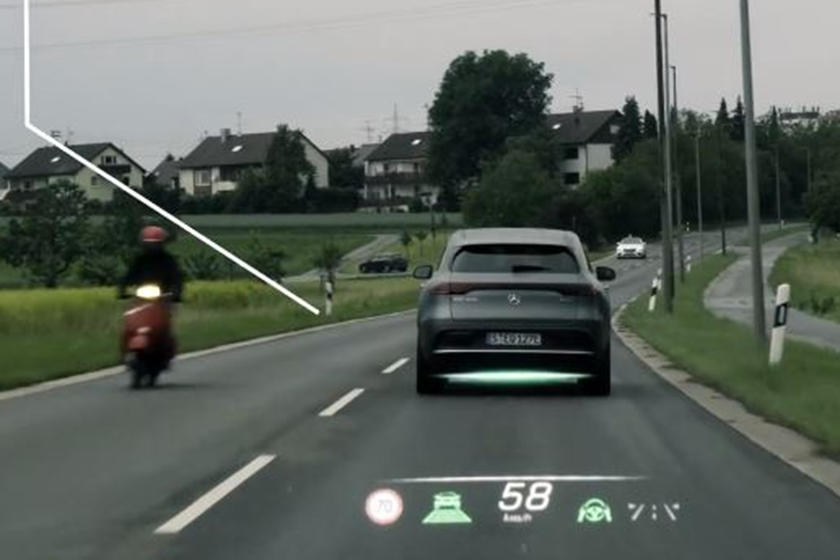
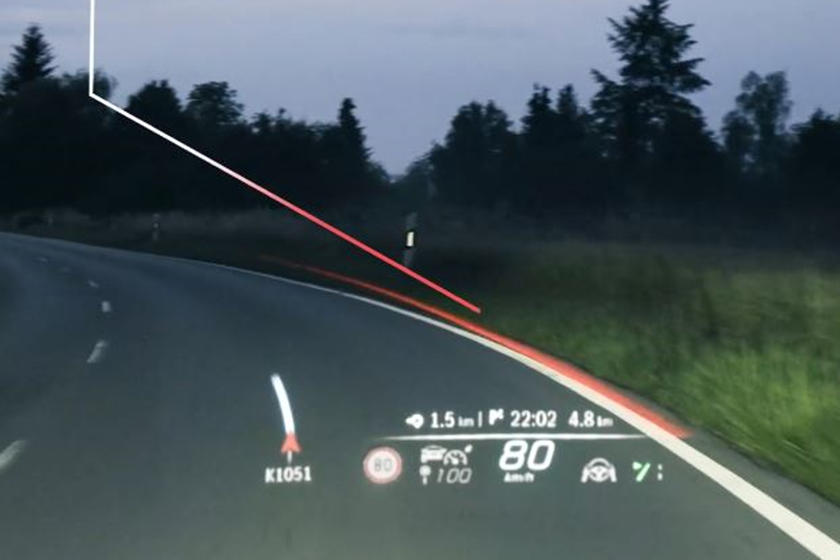
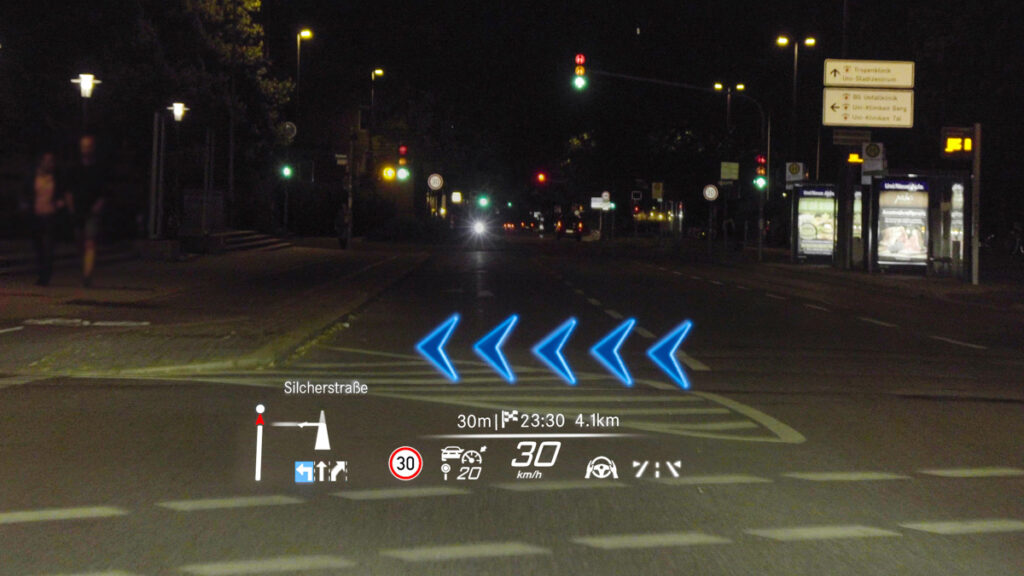
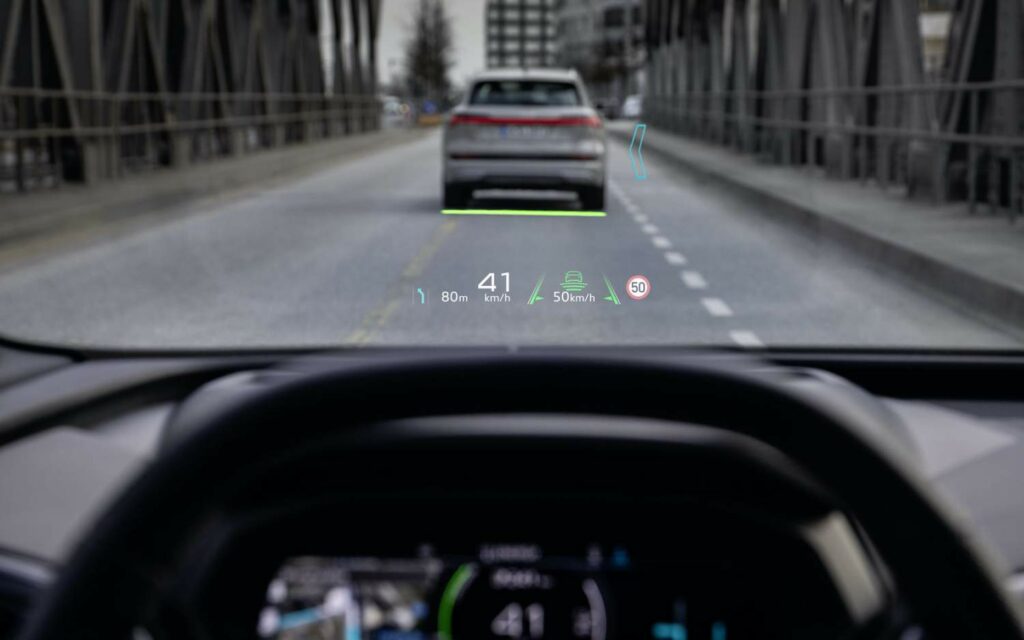
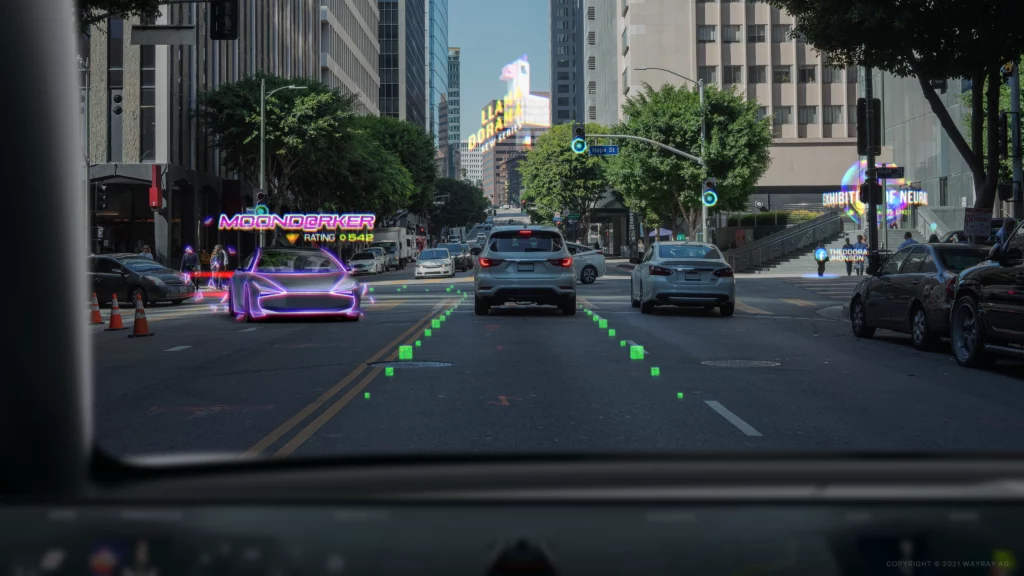
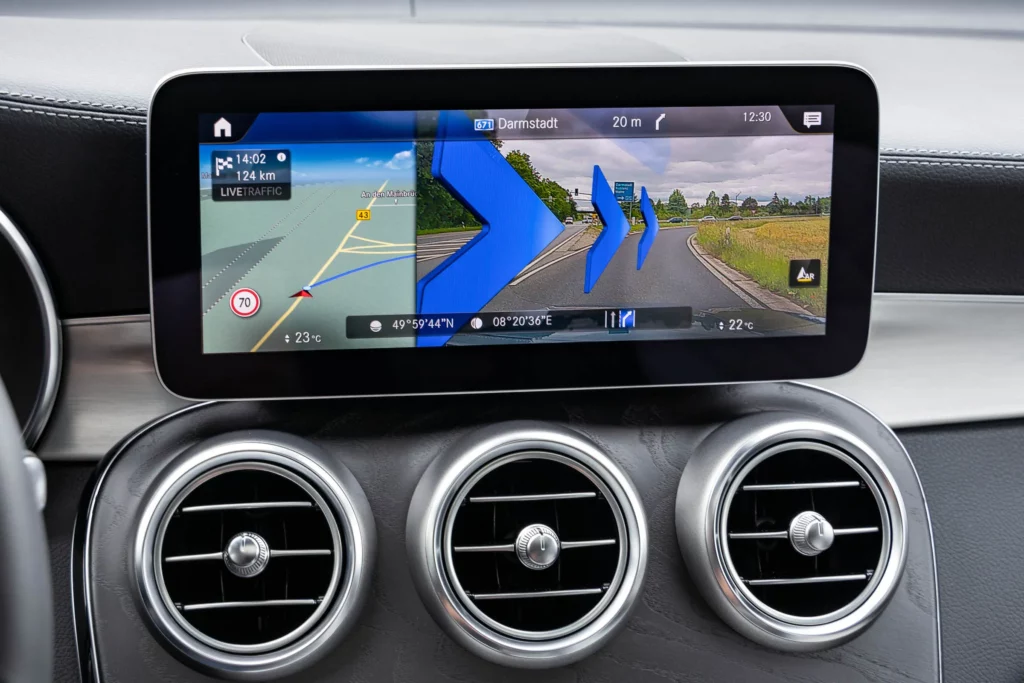
2018 was the year when Mercedes Benz introduced their newest infotainment system called MBUX. This uses the front camera (originally used for parking) to create a live stream of the road ahead, combined with graphics of navigation hints or finding adresses. Since then it was continuosly improved and the latest version was revealed in 2021 in the S/EQS-Class models, featuring an AR navigation display and a HUD with distance assist, lane keeping assist and dinamic arrows showing directions.

Video demostrations of the 2021 MBUX system:
https://www.youtube.com/watch?v=hnRbi5UcJnw
https://www.youtube.com/watch?v=DCgy3askMcM

Audi AR HUD

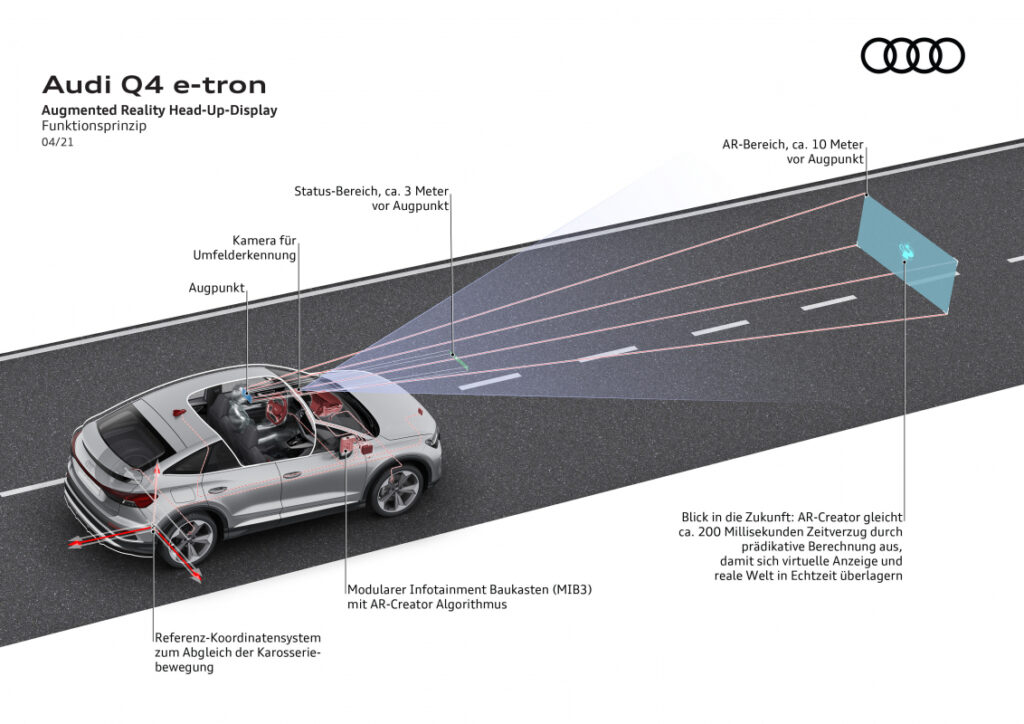
Audi announced their augmented reality HUDs as an optional feature for the newest high-end electric SUV, the Q4 e-tron for 2021. The visual information shown in front of the driver are similar to the MBUX’s content. Audi explicitly defines two areas: the status field (in a visual distance of ca. 3 m) and the AR field (in a visual distance of ca. 10 m), which seems to be bigger than in the German competitor’s solution.

Demo video of the Q4 e-tron HUD:
https://www.youtube.com/watch?v=Ea6o-_smVk8

Hyundai and WayRay

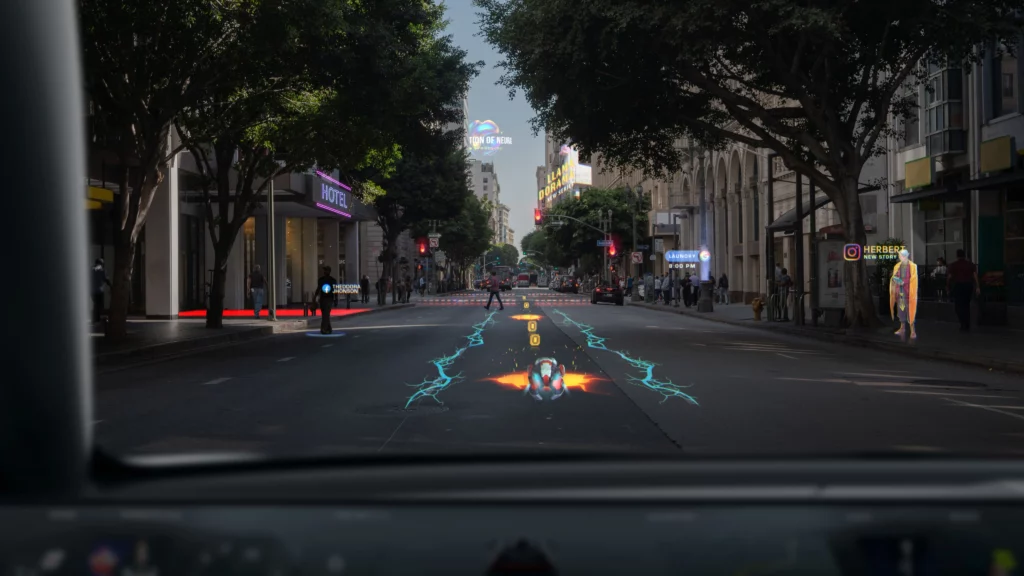
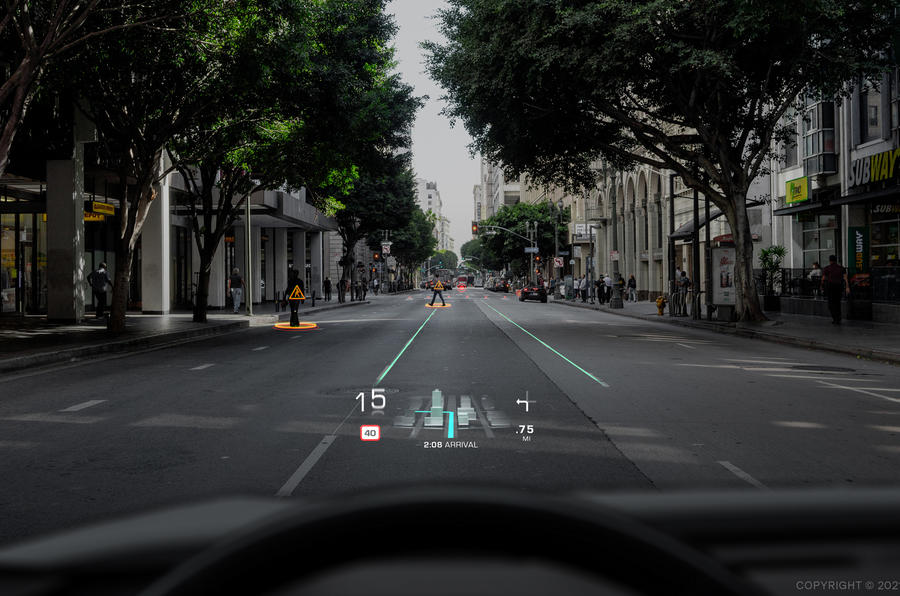
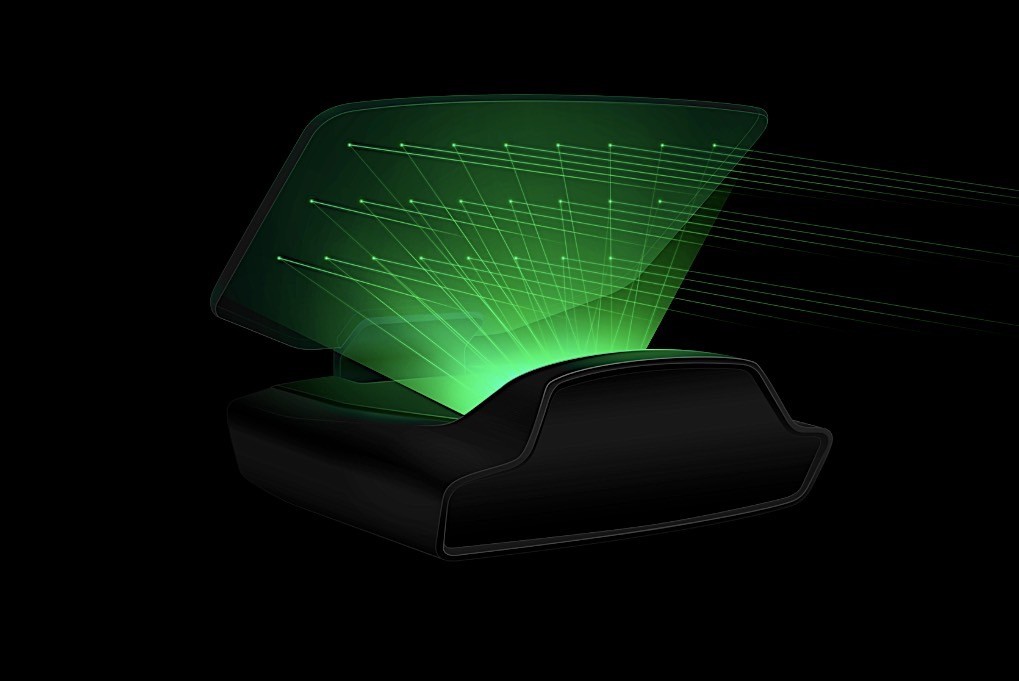
Looking at HUDs further, Hyundai/Genesis was the first brand to implement laser-holographic AR head-up displays in their G80 model, presented by the young AR developer company WayRay in 2019. It is said to have tremendous benefits compared to past HUDs (using reflected LCD screens) in terms of precision and visibility for the driver.

The Swiss startup WayRay claims to be the only company to have implemented holography to HUDs. Their holographic optical elements (HOEs) in their displays should provide unprecedented 3D images while remaining transparent and capable of being bent to windshields. The company presents its uniqueness in the field by covering “deep-tech” holography hardware development (e.g. blue-laser beams) as well as software development, all realised in-house.

They have already received large fundings by Hyundai and Porsche, have presented a 180° AR cockpit experience and offer different add-on solutions for vehicles, boats and airplanes. Their newest project is a shared car concept (“Holograktor”), designed for the “Metaverse” with a complete gaming / working / learning possibility while traveling autonomously. In their cooperation with Pininfarina on a concept car, they proposed solutions of the “True AR” displays also for side windows, providing new ways of passenger infotainment and entertainment experiences.

A report from the FIA Formula E on WayRay’s developments also predicts the use of HUD systems for race cars in the future. The pilots behind the wheels could get visualized ideal racing lines, brake points or a ghost car to chase on the race track.

Hyundai’s In-Car Noise Cancelling

Besides HUDs, Hyundai is pushing the development of AR solutions in cars in other aspects as well. Like in our headphones, noise cancelling also found its way into the car interiors, bringing more comfort to the passengers. According to Hyundai, the earlier systems were only capable of masking steady engine noises, but their newest solution (“Road Noise Active Noise Control”) in the upcoming Genesis GV80 will be capable of deleting different tire noises at different speeds. It uses multiple microphones placed directly into the wheel wells, accelerometers, amplifiers and a digital signal processor. As a result of the complex calculations for each individual wheel, the in-car noise should be reduced by half (3 dB).

Engine sound enhancements

Writing about noises of the car, we also have to take a short look at the opposite effects to noise cancelling – the engine sound enhancement devices. Due to the downsizing of the engine displacements, the roars coming from the combustion got also reduced. To keep the emotions connected to sporty engine sounds though, manufacturers are using additional devices to create compensating sound effects.

These can be pipes from the intake manifold connected to the dashboard walls, in some cases with an extra flap to control the sound throughput only for the sporty driving situations (Toyota, Ford, Porsche).

BMW was known to use engine sound amplification through a synthesised reproduction of the actual engine noise played simply on the car’s speakers.

The Volkswagen Group made it a bit more complicated by adding a special speaker device (“Soundaktor”) below the windshield to produce deep, buzzing tones resembling larger engine sounds. In some models there are also speakers built into the exhaust pipes to alter the natural noises coming from the engine, to make them more emotional or masculin.

Soundmodule for the Mercedes G350d

3D ADAS system of Arkamys

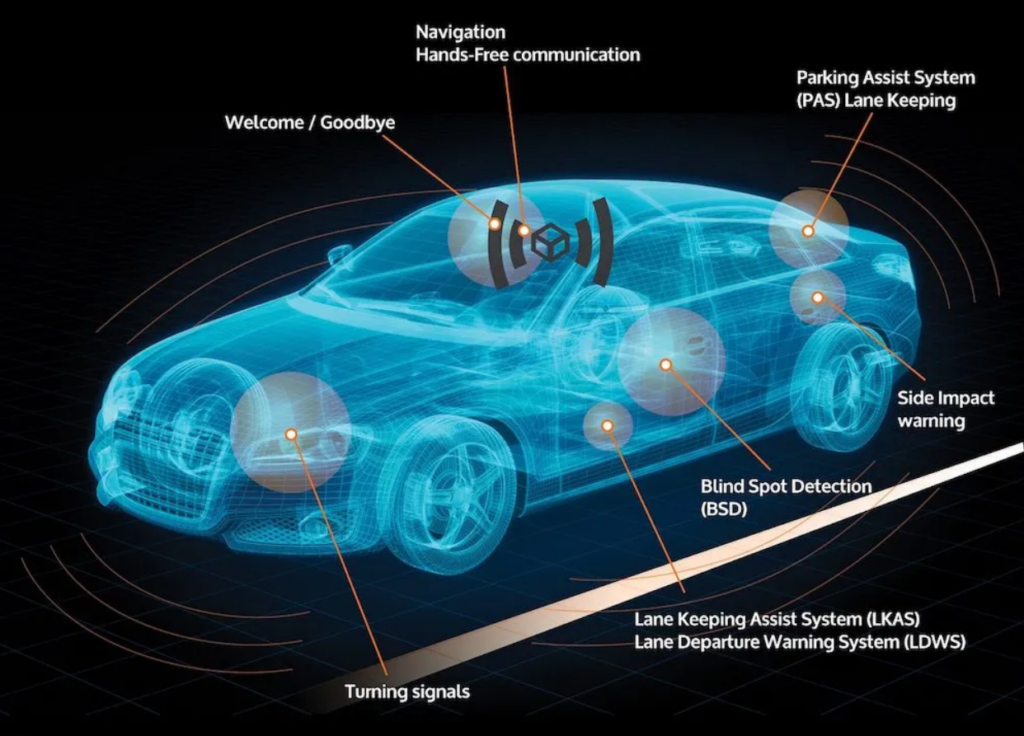
Beeping noises in a car are existent since many years, with the intention to help drivers. But beeping on itself is not always enough to give an understandable signal about what is happening or dangerous around the driver. The company Arkamys presented an intuitive alerting concept for Advanced Driver Assistance Systems – parking, lane keeping, blind spot and other assistants – by placing many different speakers inside the cabin and generating a 3D sound experience. With this it is possible to signalize the direction where a possible danger can exist, making the recognition and processing of the information easier and more intuitive for the driver.

Electric cars

Electric cars are further good examples where in-car noise generators are used to give the driver and passengers the known feeling of vehicle driving dynamics. Porsche is a perfect example where specific sounds are developed for representing the brand’s identity within the driver experience. They call the system “Porsche Electric Sport Sound” that enhances some natural noises of the drivetrain but also reduces disturbing ones, while implementing sounds to compy with the legal regulations for electric vehicle alerting sounds.

Thinking further about sound augmentation in cars, probably the already most spread system is the parking assistant, giving beeping sound feedback on the remaining distance to obstacles around the car. The design of these systems could probably fill a chapter on its own, but as it is already an everday tool, I won’t go further into detail on it.

The above listed examples are not even close to a complete list of use cases. Therefor I want to further research the current technologies. The next step will then be to look into the reasons for these systems, why they were developed and what practical needs, feelings and experiences are the underlying causes.

Sources

Online article on Wired: With In-Car AR, Drivers Get a New View of the Road Ahead. Retrieved on 05.12.2021
https://www.wired.com/story/in-car-ar-drivers-get-new-view-road-ahead/

Article on Wired: Hyundai’s Luxury SUV Mixes Mics and Math for a Silent Ride. Retrieved on 05.12.2021
https://www.wired.com/story/hyundai-genesis-gv80-suv-noise-cancelling/

Online Article on FIA Formula E: How AR and VR are revolutionising the car industry. Retrieved on 05.12.2021
https://www.fiaformulae.com/en/news/2020/june/ar-vr

WayRay – offical website. Retrieved on 05.12.2021
https://wayray.com/#who-we-are
https://wayray.com/press-area/#media_coverage

Online article on WayRay by CNET and Autocar. Retrieved on 05.12.2021
https://www.hyundai.news/eu/articles/press-releases/hyundai-wayray-unveil-next-generation-visual-technology-at-ces-2019.html

YouTube video by Roadshow: CES 2019: WayRay’s holographic AR windshield is real, hitting the road soon. Retrieved on 05.12.2021
https://www.youtube.com/watch?v=HFIgjQI2E6Y

AutoCar article on the Pininfarina concept car. Retrieved on 05.12.2021
https://www.autocar.co.uk/car-news/new-cars/pininfarina-concept-car-showcased-holographic-ar-display

Online article by AutoZeitung: Mercedes entwickelt MBUX weiter. Retreived on 05.12.2021
https://www.autozeitung.de/mercedes-infotainment-192628.html

Mercedes-Benz MBUX System – online articles and images, retrieved on 05.12.2021
https://www.wired.com/story/in-car-ar-drivers-get-new-view-road-ahead/
https://www.extremetech.com/extreme/314758-2021-mercedes-s-class-2-hud-sizes-level-3-autonomy-4d-sound-5-lcds
https://carbuzz.com/news/new-mercedes-s-class-shows-off-amazing-augmented-reality-display

Audi AR HUD system: online article and Youtube video on Slashgear. Retreived on 05.12.2021
https://www.slashgear.com/the-audi-q4-e-trons-augmented-reality-head-up-display-is-dashboard-genius-09662735/
https://www.audi-technology-portal.de/de/elektrik-elektronik/fahrerassistenzsysteme/audi-q4-e-tron-ar-hud-de/

Online article on GeekDad: Augmented Reality for Your Ears. Retrieved on 01.02.2022
https://geekdad.com/2016/02/arkamys/

Image of Mercedes G350d soundmodule. Retrieved on 01.02.2022
https://www.tuningblog.eu/kategorien/tuning-wiki/soundgenerator-nachruesten-232502/

CarThrottle article on sound enhancers. Retrieved on 05.12.2021
https://www.carthrottle.com/post/5-ways-that-manufacturers-enhance-the-sound-of-their-cars/

The Porsche Sound – online article, retrieved on 05.12.2021
https://newsroom.porsche.com/de/produkte/taycan/sound-18542.html

IoT devices for medical applications

Data is driving change in most industries in the past years. Enterprises gathering significant data from users can tailor their experience better to them.

Major tech players have entered the field of Health in recent years. Fitness promotion, health indicators monitoring, and emergency contact are some of the key features that companies like Apple, Samsung, Meta, Fitbit, or Garmin have in their offerings through tracking wearables in form of smartwatches with GPS, Barometer, Gyromenters and an array of medical-grade sensors, like Apple’s FDA Approved ECG sensor in the Apple Watch.

This ability to gather data from the user in a non-invasive and continuous way is great news for health services around the world. Some of the main Health indicators, like blood pressure, oxygen levels, and glucose levels that previously required a visit to the doctor now can be done in real-time and telematic, reducing pressure on a strained health system and reducing cost in an ever-increasing expense for governments around Europe.

Telehealth or remote doctor’s consultations are another great option for non-urgent questions that don’t require a physical appointment anymore and help prevent overcrowded hospitals.

A sensible way to collect data can help health administrators track a population’s overall health and implement policy to help their citizens lead a healthier life because prevention is always a better solution than treatment. An easier and most continuous way of following up with patients via Telehealth is also a better way to ensure that people are on track with their treatment in a more efficient manner.

Literature:

https://blog.kiversal.com/que-es-la-iomt/

https://builtin.com/internet-things/iot-in-healthcare

https://www.businessinsider.com/iot-healthcare

Types of deceptive design patterns

In todays blogpost I want to get a bit more specific and list types of deceptive design patterns* with some extraordinary bad examples for those technique. I am going to use the 12 defined types of deceptive design patterns* from Harry Brignull. 

Bait and Switch

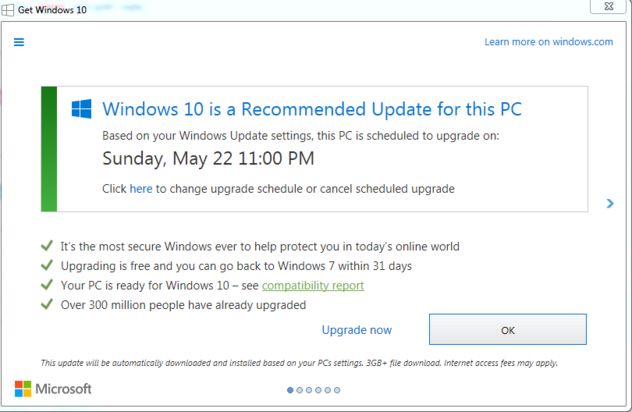
This pattern works with previous experience and common user interactions. The user wants to complete an action, but something different, undesired or even the exact opposite thing happens. The most famous example for bait and switch is the Microsoft update pop-up to Windows 10. Normally clicking the „x“-button in the upper right corner means closing the window without completing any action. In this case they switched the meaning to „Yes, let’s do this update“. Another common strategy is to simply switch „Yes“ and „No“ Buttons for additional add-ons in an e-commerce process.

Source: https://www.darkpatterns.org/types-of-dark-pattern/bait-and-switch

Disguised Ad

In this case ads are hidden and they seem like they are actually part of the interface. Since they look like content or any kind of navigation, users are clicking them assuming it is a genuine interaction of the website. Prime example here are download buttons linking to different websites.

Forced Continuity

This pattern tricks users into continuing any kind of paid membership by charging them after a free trial without a warning or making it really hard to cancel on automatic renewed subscriptions.

Friend Spam

Users grant access to numbers or emails in their phone or connect their social media accounts in order to „find friends“ within this environment, but the product actually spams all contacts pretending to be the user himself. 

Hidden Costs

A design that intentionally hides costs and makes product or service seem cheaper by adding additional costs or fees later on. As the user is already in the checkout process, it is more likely that he continues anyway even after realizing the price change. Usually those hidden fees are delivery costs or service fees.

Misdirection

This pattern is also known as aesthetic manipulation. Focusing the user’s attention on an interaction to distract them from something else. There are many different approaches on how to use this dark patterns as it does not have a simple context like many other types.

Price Comparison Prevention

Showing the price of products or service in a way that makes it difficult for the user to compare two items. One way of achieving this is work with different units and not showing price per weight. Another one is to show prices of products only on each subpage and never next to each other so the user has to remember the price and go back and forth to actually compare them.

Privacy Zuckering

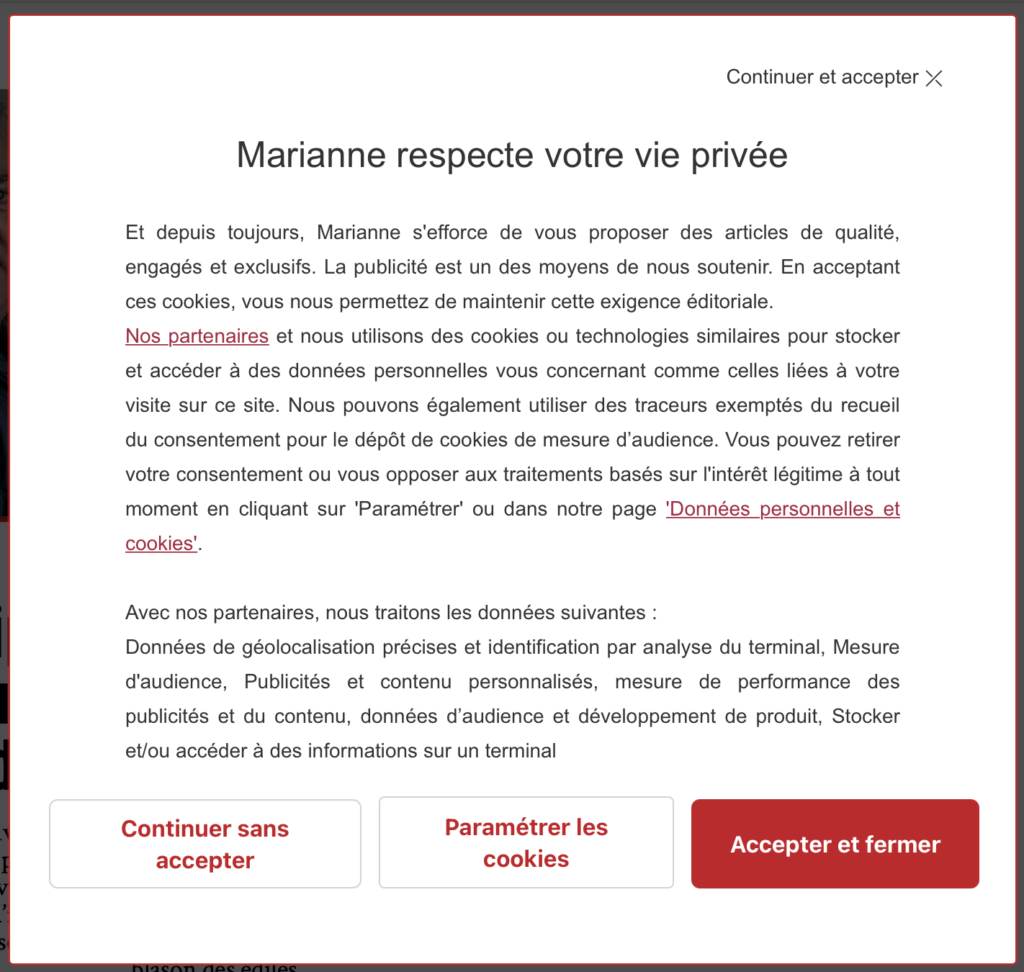
Maybe the most famous of all deceptive design patterns*: tricking users into agreeing to share all their personal information. Most users are aware that cookie-concent-managers make it difficult to opt out on purpose. Additionally this one is regulated by law. 

“X”-Button is not simply closing the pop-up, but accepting all cookies. Screenshot: https://www.darkpatterns.org/types-of-dark-pattern/bait-and-switch

Roach Motel

The model describes that users easily get into a situation, but find it difficult to get out of it. This mostly happens when a user signs up for something quickly, but then is having a hard time to cancel the membership (e.g. with a phone call during business hours).

Users can not cancel by filling out a form, but have to interact with an employee. Screenshot: https://help.nytimes.com/hc/en-us/articles/360003499613-Cancel-your-subscription

Sneak into basket

Sneaking products into the users basket, that they did not add themselves. Sometimes this pattern is justified with making suggestions to enhance the user experience, but actually it is just tricking them into buying something by mistake.

Trick Questions

Using unnatural language, like double negatives, to confuse the user and manipulate their actions. Especially often this pattern is used in forms to get users to subscribe to the newsletter.

That’s it for today 🙂 

Source: Harry Brignull: Types of Dark Patterns. In: https://www.darkpatterns.org/types-of-dark-pattern

* formerly called “dark pattern”

The Found-Footage-Aesthetic: A Closer Look

Für meinen zweiten Blogeintrag würde ich mich gerne auf die ästhetischen Merkmale von Found-Footage-Filmen konzentrieren und anhand mehrere Filmanalysen diese kurz zusammenfassen. Dabei fokussiere ich mich weniger auf die Narrative der Filme selbst – ausgenommen, wenn diese durch spezielle Stilmittel zum Ausdruck gebracht wurden – sondern vielmehr auf die visuelle Beschaffenheit des “gefundenen” Materials.

Es liegt natürlich nahe, mit dem Film zu beginnen, der das Genre popularisiert und einen regelrechten Trend hervorgerufen hat, nachdem er im Internet Wellen schlug. Das Studio hatte bewusst Verwirrung in Bezug auf die Echtheit der Aufnahmen gestiftet und die gesamte Aufmachung des Filmes präsentiert sich als Zusammenschnitt des gefundenen Videomaterials vermisster Personen.

The Blair Witch Project (1999)

Sehr kompakt zusammengefasst handelt der Film von drei Filmstudenten, die verschwinden, nachdem sie in einen Wald in Maryland gereist sind, um dort einen Dokumentarfilm über die lokale Blair Witch-Legende zu drehen. Sie hinterlassen nur ihr Filmmaterial, das durch ihre Videokamera und eine 16-mm-Filmkamera entstanden ist. Als Zuschauer betrachten wir nun die gefundenen Aufnahmen.

Immersion und unmittelbares Dabeisein

Im Folgenden werde ich kurz Zusammenfassen, was mir bei der Analyse des Filmes Blair Witch Project aufgefallen ist und welche Stilmittel meiner Meinung nach das Found-Footage auszeichnen.

Bildausschnitt und Bildkomposition
Das Seitenverhältnis von 1,33: 1, fällt als erstes als Besonderheit auf und hebt sich bereits hiermit von moderneren Kino Formaten ab. Aufgenommen wurde das Filmmaterial mit einer älteren 16mm Kamera, die die Filmstudenten für ihren Dokumentarfilm wählten.
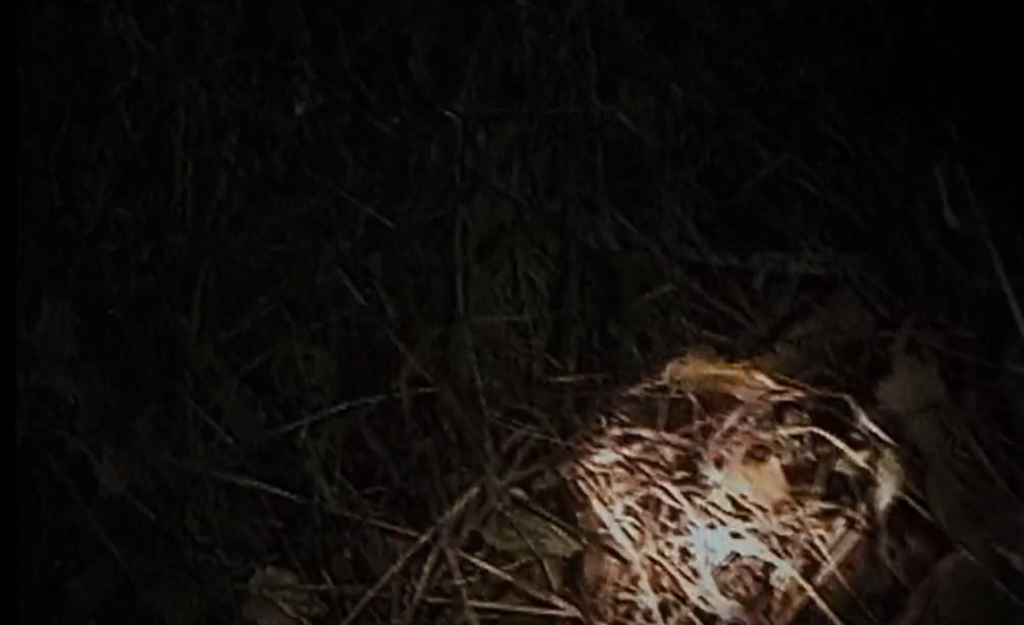
Was die generelle Bildkomposition auszeichnet ist zudem, dass abseits der Interviewaufnahmen, die die Filmstudenten von den befragten Dorfbewohnern erstellten, die Ausschnitte teilweise extrem verwackelt, verschwommen oder nur sehr schwer erkennbar sind. Teilweise bleiben für längere Zeit lediglich verschwommene Formen in ungewöhnlichen Blickwinkeln zu sehen, bevor der Fokus langsam schärfer wird und sich die Abbildungen konkretisieren. Längere Sequenzen sind völlig schwarz oder bestehen nur aus einem Rauschen, welches hin und wieder von einem kurzen Blick auf die unmittelbaren Geschehnisse durchbrochen werden.
Einige Momente lang wird auf die Kamera scheinbar auch komplett vergessen, sie wird grob zur Seite geworfen oder kurz auf den Boden abgelegt, ohne dass wir als Zuschauer genau erkennen, was gerade passiert.
All diese Besonderheiten weisen zum einen auf die Existenz der Kamera innerhalb der Narrative des Filmes hin, verdeutlichen, dass wir als Zuschauer das rohe Material zu sehen bekommen und wirft uns gemeinsam mit den Filmenden mitten ins Geschehen.

Why the 'Blair Witch Project' is an awful movie – The Other Press

Sensor und Kamera
Gerade in Szenen, welche in der Nacht gedreht wurden, fällt der hohe ISO Wert und ein extremes Rauschen der Kamera auf. Einige Sensorstörungen oder Glitches beim hektischen Hinlegen der Kamera verstärken das Gefühl, dass die Person, die wir begleiten völlig darauf vergisst, dass sie das Gerät mitführt. Uns wird als Zuschauer klar, dass die unmittelbare Bedrohung eindeutig Priorität hat. In diesen Sequenzen spielt das Sounddesign eine wesentliche Rolle und das meiste Geschehen spielt sich eher in unseren Köpfen als im Video ab.

Verschmutzung und Linse
Da die Schauspielstudenten, deren Aufnahmen wir sehen, an einem gewissen Punkt bereits mehrere Tage im Wald herumirren, legen sich zunehmend Verschmutzungen auf der Linse und dem Objektiv der Kamera ab. Gewisse Lichtsituationen erzeugen so verstärkte Linseneffekte und Artefakte.

Blair Witch Project, The (1999) - tbwp1999-1099 - high quality Horror  Movies screencaps gallery

Differenzierung der Kameras
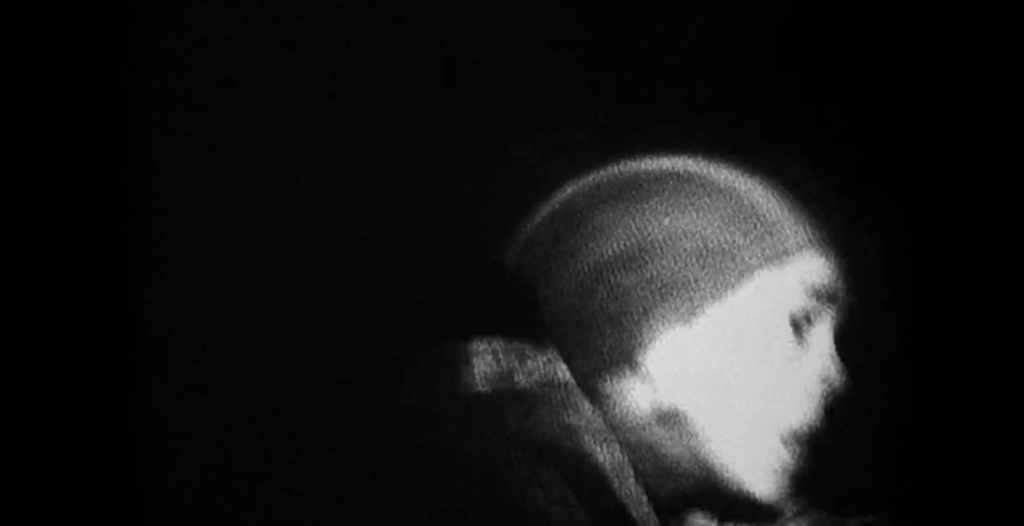
Das Material der zwei verwendeten Kameras wurde scheinbar zusammengefügt und interessant ist, dass eine Kamera mit der gefilmt wurde, nur in schwarz-weiß aufnimmt, was es dann im Laufe des Filmes möglich macht, zu erkennen, aus welcher Sicht wir gerade am Geschehen teilhaben, bzw. welche Person die Kamera hält. Dies kann ebenfalls als Erzählungswerkzeug verwendet werden, um Zuschauern gewisse visuelle Ques zu geben, wo und wann man sich innerhalb der Geschichte befindet.

The Blair Witch Project (1999) - Photo Gallery - IMDb

Taschenlampe und Nachtsicht
Gerade Szenen in der Nacht, bei denen die einzige Lichtquelle der Kegel der Taschenlampe oder das Licht der Kamera ist und die harten Schatten, die das Dickicht des Waldes wie eine Gefahr aussehen lassen, erzeugen eine extrem angespannte Stimmung. Eine der verwendeten Filmkameras im Speziellen erzeugt einen sehr hohen Kontrast des Bildes und jeder Schatten wirkt bedrohlich.

Verwackeln des Bildes und Motion Blur
Etwas, das natürlich für große Dynamik in den Aufnahmen sorgt, ist das Verwackeln der Kamera bei jeder Bewegung der Protagonisten. Gerade, wenn diese vor etwas davonlaufen oder sich hektisch Bewegen, verleiht dies den Filmaufnahmen eine stark immersive Wirkung und die Dramatik der Situation wird verdeutlicht, da keineswegs mehr an das Ergebnis der mitfilmenden Kamera geachtet wird.
Es ist interessant, dass wir während des gesamten Filmes die Hexe selbst nie zu Gesicht bekommen. Der Horror des Filmes entsteht größtenteils dadurch, dass wir die Angst und Panik der Protagonisten miterleben, während jedoch die wirkliche Bedrohung zu keinem Zeitpunkt im Film klar zu sehen ist.

Die Existenz der Kamera innerhalb der Narrative
Auch wenn dies ein Aspekt ist, der vielleicht für meine Zwecke weniger relevant ist, möchte ich kurz auf die Rolle eingehen, die das Aufnahmemedium im Film spielt. Die Kamera ist immer wieder Grund für Auseinandersetzungen und Streitereien. Als Zuschauer werden wir konstant daran erinnert, dass die Kamera präsent ist. – Natürlich wäre der Film wenig spannend oder kurz, hätten die Protagonisten beschlossen, das Filmen abzubrechen. Daher spielt auch die Tatsache, dass die Studentin, die einen Großteil der Aufnahmen durchführte sehr versessen darauf ist, nicht mit leeren Händen zurückzukehren.

Literaturliste

  • Cowie, R., Hale, G. (Produzenten) & Myrick, D., Sánchez E. (Directoren). (1999). The Blair Witch Project [Film]. United States: Artisan Entertainment.
  • Norbert Groeben, Margrit Schreier, Christine Navarra: Das Verschwinden der Grenze zwischen Realität und Fiktion. Eine inhaltsanalytische Untersuchung zur Rezeption des Kinofilms „The Blair Witch Project“. In: Achim Baum (Hrsg.): Fakten und Fiktionen. Über den Umgang mit Medienwirklichkeiten. UVK, Konstanz 2002, S. 271–282.
  • Jane Roscoe: The Blair Witch Project. Mock-documentary Goes Mainstream. In: Jump Cut. Nr. 43, 2000, S. 3–8.: http://www.ejumpcut.org/archive/onlinessays/JC43folder/BlairWitch.html
  • imdb: The Blair Witch Project (1999): https://www.imdb.com/title/tt0185937/mediaindex?ref_=tt_ov_mi_sm
  • Christoph Elles, Dominic Grzbielok: Das Phänomen der Fälschung in den Medien. Fiktion und Wirklichkeit. VDM Müller, Saarbrücken 2007, (Kapitel Das Phänomen Blair Witch Project.) S. 16–81.

Reference works for Extended Guitar Performance #3

During my research on Google Scholar, I came upon the following journal article called “The Electric Guitar: An Augmented Instrument and a Tool for Musical Composition”. I found the content of this article highly inspiring since it deals with the history of sonic augmentation of the electric guitar and is thus also highly relevant for my project (which, of course, also seeks to extend the range of sound possibilities of an electric guitar).

According to Lähdeoja, Navarret, Quintans and Sedes, the electric guitar can be considered a highly augmented instrument in itself since it is basically an acoustic guitar whose sonic possibilities were and still are extended by electromechanical and digital means. Obviously, at the beginning of the electric guitar stands the acoustic guitar since – as far as the basic physical qualities are concerned – an electric guitar is very much based upon an acoustic: (physical) features such as metallic strings, a glued or screwed neck, strengthened with a truss rod, tone woods (maple or mahogany necks with a maple, rosewood or ebony fingerboard) as well as metallic frets and a chromatic scale were all transferred from the acoustic onto the electric guitar. However, with the invention of the solid body a new era began, introducing a major extension of sonic capabilities through electric technologies of amplification. With an electric guitar, the actual sound source of the acoustic guitar becomes part of an electro-acoustic chain that additionally comprises a range of analog and/or digital modules that are necessary for producing sound, thus giving the electric guitar a modular property. Of course, the electrification of the guitar sparked a whole new way of thinking and creating sounds, leading to the development of new playing techniques.

While “the electrification of the guitar is probably the most important modification the instrument has undergone in the twentieth century”, the instrument and its sound possibilities continued to be intensely advanced in the following decades, with the developments driven by guitarists, instrument makers and the requirements of different musical styles. The afore mentioned modularity of the electric guitar that includes the selection of tone woods, pick-ups, amplifiers, effect chains, etc. provides the guitarist/musician with a lot of freedom as far as customizability is concerned. However, it is the case with every instrument that along with the increase of sonic possibilities and corresponding control interfaces, playing the instrument gets more and more complex as well, potentially overburdening the musician’s (physical) capabilities. In order to avoid the latter, most control interfaces for electric guitar have been conceived with simplicity in mind, featuring relatively simple controls and traditionally being conveniently placed within the guitarist’s reach (e.g. an effect pedal that is (dis)activated by stepping on it). While serving its purpose of not overburdening the player, Lähdeoja, Navarret, Quintans and Sedes observe that this approach limits the possibilities for dynamic, real-time interaction with controls which leads to a status they describe as the “sonic stasis common in electric guitar playing: the player chooses a specific sound for a musical part with “on/off” effect switches, playing with the same timbre until the next “monolithic” modification”.

I think this latter notion is very interesting because it justifies my quest to identify ways of extending the sonic range of an electric guitar using only the natural movements of the player as an input source for effects. While the article states that there is currently research being done on this topic, I think that I can still add to the current research with my project and its outcomes.

Source:

Lähdeoja O., Navarret B., Quintans S., Sedes A. (2010). The Electric Guitar: An Augmented Instrument and a Tool for Musical Composition. Journal of Interdisciplinary Music Studies, 4(2), 37-54. 10.4407/jims.2010.11.003

Idea Update

Good News: Conducting thorough research, concerning extended guitar sound possibilities, during the month of November allowed me to further specify my project idea “Extended Guitar Performance”. By firstly discerning what has already been done in this area of musical research, I identified several commercials products (see the MIDI rings in Blog #6) as well as custom-made products (e.g. Blog #9 + Blog #10) that all deal with movement and/or gesture-controlled extension of guitar sounds. However, I also found that the bulk of these “gadgets” require the guitar player to move his body and hands in certain ways to specifically trigger the sensors built within the gadget. Consequently, the guitarist often needs to interrupt his natural playing movements in order to wave is hand for example. I saw this for myself when I tried to keep playing guitar in the usual way while incorporating special hand movements to trigger hypothetical sensors (having not built anything yet) – it proved to be almost impossible to maintain a typical rock groove for instance much less playing lead.

That is why I thought that it would be even better if one could extend a guitar’s sonic possibilities while at the same time not compromising the usual way people play guitar. Based on this notion, I decided to try finding a non-evasive way, restricting my idea to only using natural movements of a guitarist to trigger sensors in order to extend guitar sound possibilities.

Consequently, some changes to my previous idea will be made:

I will abandon the idea of attaching (accelerometer) sensors to the guitar body to pick up its movements because moving in a certain way again is not part of the natural movements of a guitarist.

Instead, I will focus on the “Solo Mode” effect, described in Blog #8, and effects based on the same concept since this kind of system allows the guitar player to move up and down the neck with effects adapting automatically to the fret position. During this week’s consultation session, I brought this idea before my supervisor, and he recommended looking into ultrasonic or infrared sensors to locate/pinpoint the left hand along the neck. This will, of course, be done. Furthermore, my supervisor also saw the possibility of using this system beyond switching from rhythm to lead sound. Additionally, one could define certain areas/positions on the fretboard that each give a slightly different sound, allowing the guitarist to change is sound according to fret position.

I will also further pursue the idea of placing an IMU type of sensor on the pick to pick up the natural strumming and picking movements of the guitarist. Here, it would have been practical to resort to one of the MIDI rings which are, however, quite expensive. At the moment, a custom setup is hence favoured.

Naturally, I will also continue to analyse a guitarist’s natural body and hand movements in order to come up with additional ways to harness them as an input source for guitar effects.

Lastly, upon the recommendation of my supervisor, I will not yet fully discard the possibility of using MIDI pick-ups. During my research I stumbled upon the Fishman Triple Play, a hexaphonic pick-up, capable of picking up the pitch of each string separately and converting it to MIDI data. Albeit coming with a huge price tag (300€ on Thomann), the pick-up constitutes another possibility of adding to a guitar’s sound potential without compromising the player’s usual movements. This will be given further thought.

Sources:

https://www.thomann.de/at/fishman_triple_play.htm