| short summary of a cockpit design trends report, published early 2021
According to a report of 2020 looking at new car models and concepts cars released in the last years, following major directions of intelligent automotive cockpit design trends can be summarized:
Richer versatilities New products are getting introduced with developing automotive electronics, such as driver monitoring systems, driving recorders, rear row and co-pilot entertainment displays. Additionally, intelligent surfaces allow further versatility – window or sunroof glasses can become displays and intelligent seat materials can become interfaces as well.
Multi-channel, fused human-vehicle interaction New ways besides touch and voice control are active voice assistants, gesture control, fingerprint reader, sound localization, face recognition and holographic imaging. These multi-channel interaction modes can contribute to safer use and driving as well as deliver an extended user experience.
3D and multiple screen cockpit displays We see dual-, triple- and quint-screen and A-pillar display implementations for delivering control, co-pilot and rear row interactions.
“User experience”-centricity and scenario-based interaction In-vehicle scenario modes are getting in focus – the car interior should serve as an intelligent, connected, flexible and comfortable personal space, for e.g. driving, resting, working or even shopping. As a UX-centered implementation example the Mercedes-Benz S-Class ambient lighting system was named, that uses 263 LEDs to adapt to driving situations (warnings) or give a real-time feedback of interactions with the onboard computer.
Interaction with every surface via intelligent materials New surface materials are introduced in concept cars to explore touch control possibilities like displaying fuctional buttons in new ways.
Touch feedback as key technology for higher level of safety Besides TIER-1 suppliers also several start-ups are developing touch feedback technologies for supporting less distraction and more effective driver-car interaction.
Software systems will be keys of differentiation The introduction of Android to in-car entertainment systems was a big step. The need for personalization and simultaneous software and hardware iterations and 3D vision are new challenges for the operations system development in realizing intelligent cockpit systems.
The Vibrato Scanner is an electromechanical device that produced vibrato and chorus effects in old Hammond organs. Unlike newer technologies that modulate the signal at their source, the Scanner system modified the sound right on its way from the keyboard to the amplifier.
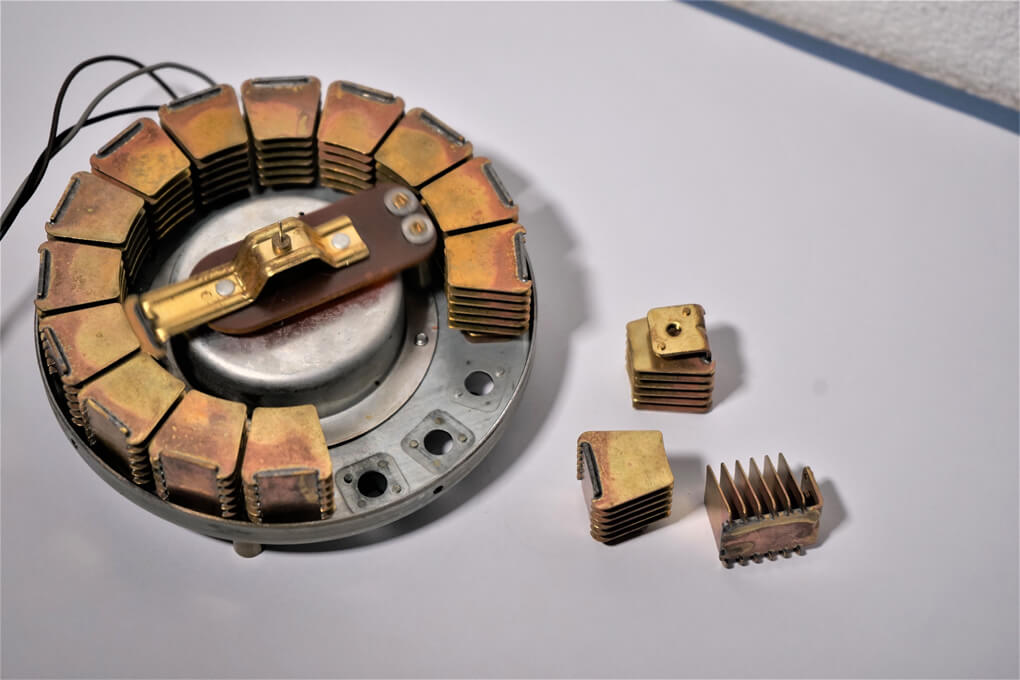
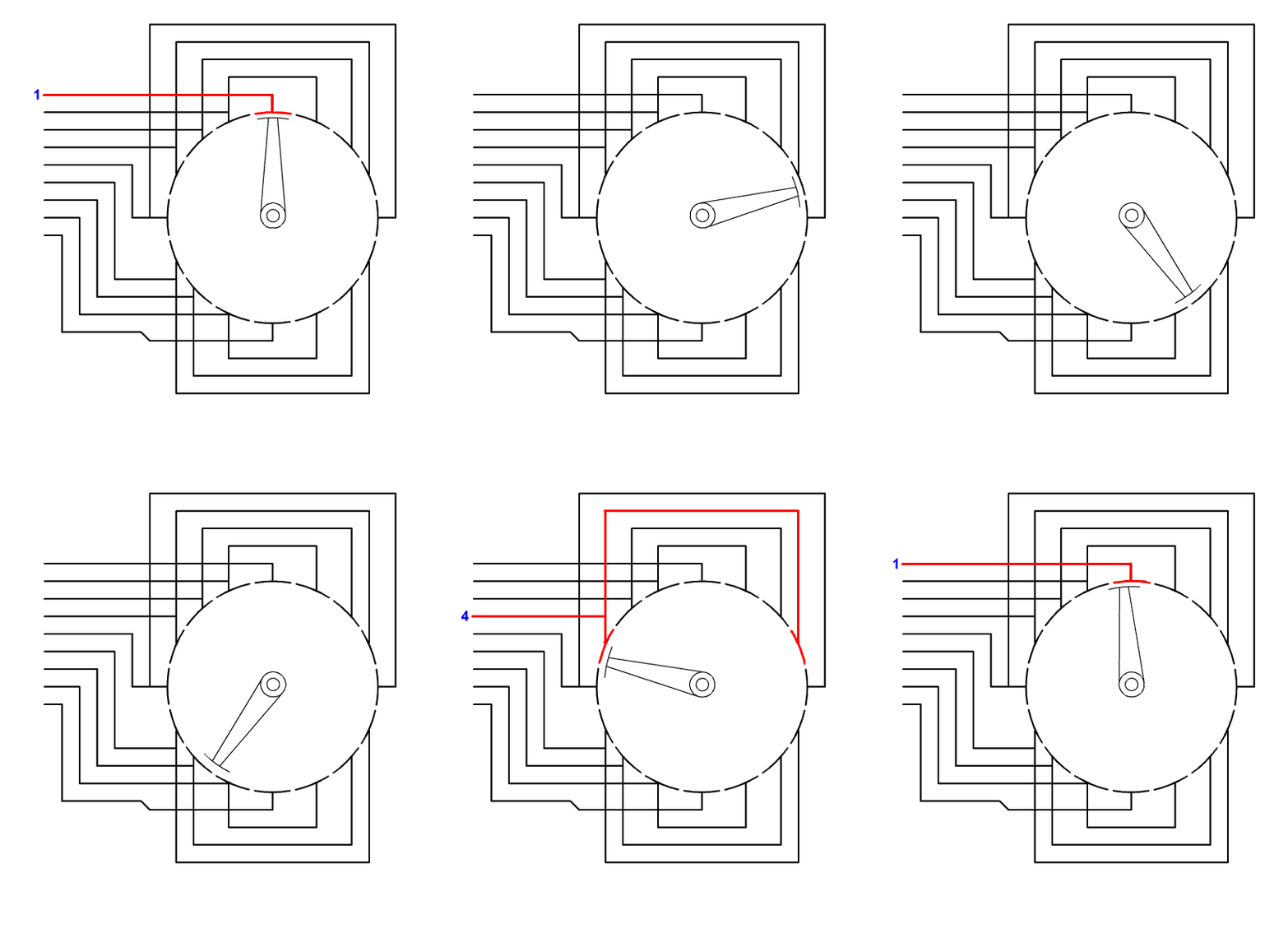
The hardware consists of two main elements: a phase shift line enclosing a series of passive all-pass filter stages and a scanner that is a single-pole 16-throw air-dielectric capacitor switch, connecting taps on the delay line to the output.
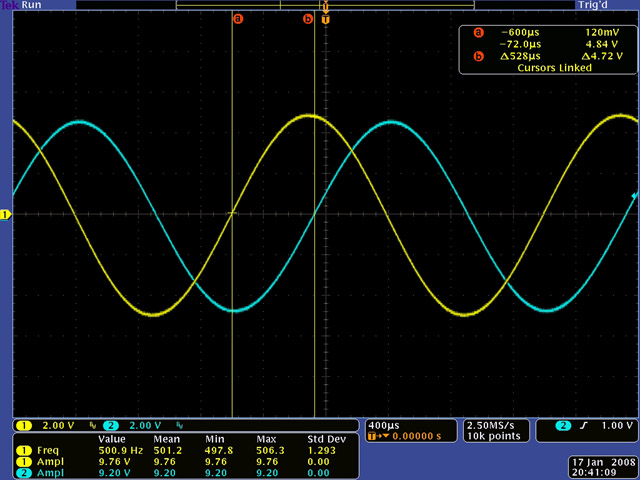
Each filter stage of the delay line is shifted in phase relative to the previous one, resulting in an increasing time delay between every successive step of the line (about 50μs per filter stage). Nine of these steps are connected to the sixteen inputs of the scanner, allowing it to sample back and forth along the line. For example, labeling each output of the delay line with a number from 1 to 9 would result in the following 16 digit sequence: [1, 2, 3, 4, 5, 6, 7, 8, 9, 8, 7, 6, 5, 4, 3, 2].
As the scanner gradually transitions between the taps, it alternates the phase shift applied to the sound, causing slight variations to the pitch and resulting in a vibrato effect. The depth of the vibrato effect relies on the width of the frequency shift fed into the scanner, which means that scanning about one-third of the delay line would produce a lighter vibrato effect while scanning the whole line would significantly increase its depth. The chorus effect is achieved by simply mixing the dry input signal with multiple outputs on the delay line.
In effect, scanning back and forth along the delay line is like moving toward and away from a sound source. This causes a change in frequency due to Doppler shift.
(Vorkoetter, 2009)
Originally, the delay line is part of the Hammond Vibrato Scanner unit and it incorporates a series of second-order audio filter stages where each stage is shifted in phase relative to the previous one. This results in an increasing time delay between every successive step of the line (about 50μs per filter stage). This is then fed into a scanner, that is a single-pole 16-throw air-dielectric capacitor switch connecting nine selected taps from the line to the output. As the scanner gradually transitions between these taps, it alternates the phase shift applied to the sound, causing slight variations to the pitch that result in a vibrato effect.
A notable limitation of this original design is the fixed gear ratio tied to the Generator Run Motor, which spins the rotor continuously at about 7Hz. The depth of the vibrato depends on the width of the frequency shift fed into the scanner, which means that scanning about one-third of the delay line would produce a lighter vibrato effect while scanning the whole line would significantly increase its depth. In addition to the vibrato, a chorus effect can also be achieved by mixing the dry input signal with multiple outputs on the delay line, or a chorus-vibrato by mixing the dry signal with the output of the vibrato.
The iconic chorus and vibrato effect is the result of Hammond’s extensive search for expression and emotional intensity. The Scanner Vibrato unit achieved to deliver a unique sonic character by adding depth and movement to the sound of the Hammond Organ. As the popularity of modulation effects were increasingly growing within pop music, so was the Hammond Vibrato unit. Since the 1960s, its unique sound has made its way into a wide range of genres, from blues and rock to hip hop and downtempo. Some notable artists include Booker T. & The MG’s, Yes, Beastie Boys and Portishead.
Sources:
Vorkoetter, S., 2009. Overhauling and Improving the Hammond M-100 Series Vibrato System. [Blog] http://www.stefanv.com, Available at: <http://www.stefanv.com/electronics/hammond_vibrato_mod.html> [Accessed 7 January 2022]. http://www.stefanv.com/electronics/hammond_vibrato_mod.html
Benton Electronics. n.d. Service Manual – The Hammond Vibrato – Benton Electronics. [online] Available at: <https://bentonelectronics.com/service-manual-the-hammond-vibrato/> [Accessed 7 January 2022].
Museums and exhibitions aim to bring their collections to live. Since the ongoing development of augmented and virtual reality technologies it seems obvious to integrate them in the classical exhibitions. Through the usage of AR and VR technologies, museums can add a virtual layer to their exhibitions and create immersive experiences. Some areas of application could, for example be, allowing users to explore Egyptian burial chambers, meet historical characters or find out more about an artist by virtually visiting their hometown.
As part of a study, the Research Centre of Excellence in Cyprus (RISE) has interviewed 15 global museums about their experience in including AR and VR technologies in their exhibitions. Around 50% of them stated, that they made use of these technologies in order to create an augmented spaces for visitors to experience the exhibition, for example in form of a virtual time travel. They integrated VR and AR experiences in their exhibitions as an extension to the classic exhibitions, instead of outclassing them.
Another possibility to create a virtual exhibition can be done by scan exhibitions and arrange them in a virtual space. In this way, exhibitions can be accessible from all around the world. It could also enable a larger audience, for example disabled people, to visit exhibitions they could not visit in the real life.
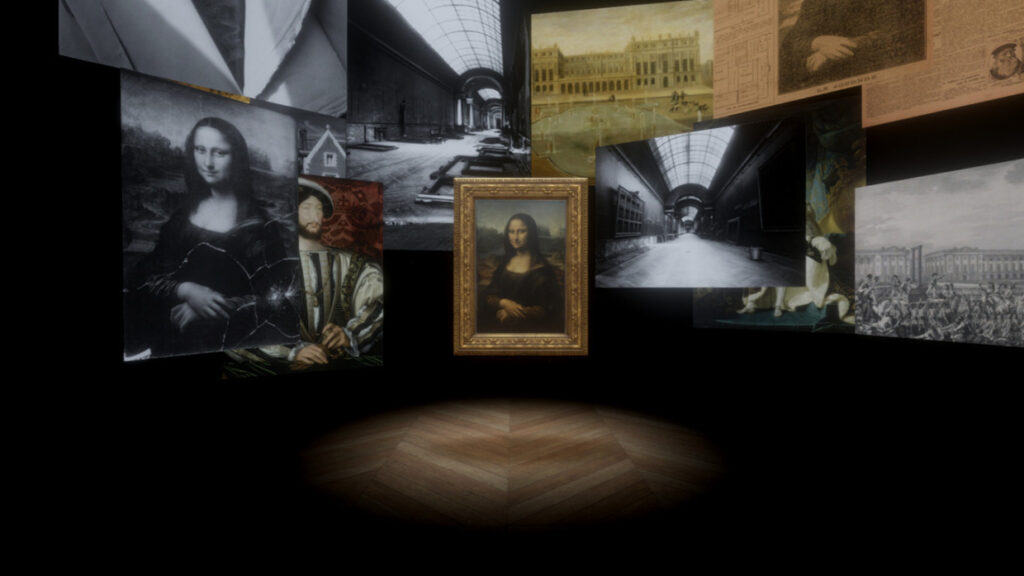
The Virtual Reality experience “Mona Lisa: Beyond Glass” was part of the Leonardo da Vinci blockbuster exhibition taken place at the Louvre in Paris, in October 2019. Through the use of animated images, interactive design and sound, it allowed the users to explore it’s details, the wood panel texture and how it has changed over the time.
The National Museum of Finland enabled their visiters a virtual time travel back to the year 1863, by letting the users walking inside the painting “The Opening of he Diet 1863 by Alexander II” by R. W. Ekman. In this VR experience the visitors could speak with the emperor and representatives of the different social classes or visit historical places.
References
Walczak, K.; Cellary, W.: Virtual Museum Exbibitions
Walczak, K.; Cellary, W.; u.A.: Building Virtual and Augmented Reality museum exhibitions
Finally I was able to take advantage of the Christmas holidays to make use of my close circle for conducting a few interviews with the end users. Perhaps it is not the best methodology, since we have no specific product to develop, but I have focused it as a continuation to deepen and test the initial results of the survey type test that I showed in the previous post. I hope that the results of the research can be extended in this way.
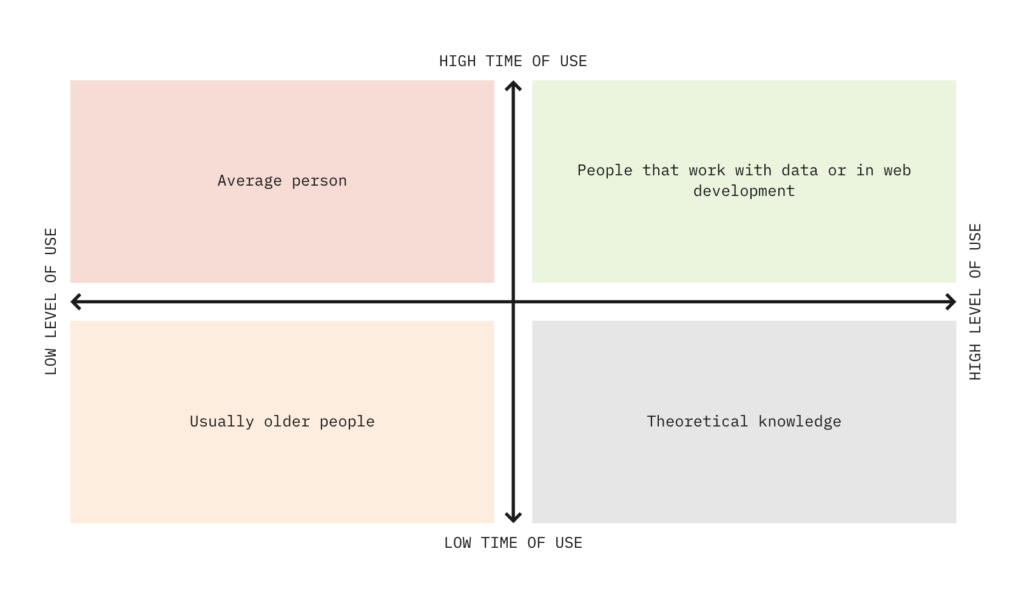
Having as a public any user of the network, I have tried to establish two key parameters when selecting different profiles for interviews:
– Level of use
Here I divided people who design, program, or work with sensitive data. In general, those who are not only users, but are also part of the structure that handle data. On the other hand, we have those who are only passive users of this type of service.
– Time of use
For this one I made a simple division between people who are most exposed to the internet and spend more time per day on a screen, so they are accustomed to read and understand the architecture of a web, as well as react agilely to pop-up and visual inputs. And with those who spend less time than average at day or week in front of the desk or with a mobile device.
This division seemed to me more accurate and efficient to establish a demographic categorization by age, gender or studies; since they are factors that I think relate directly to the user’s response to the cookie window.
Diagram 2×2
Understanding the division and choosing at least one person to cover each quadrant to be able to cover all combinations, I planned the interview script as follows:
Introduction in which the person presents himself and recounts his or her living situation: studies and career.
Examples of questions: how old are you? what are you doing with your life? do you study? do you work? In what?
2. Relationship to technology, time of use.
Examples of questions: Do you get along with computers? Do you work with computers? Do you use computers in your day to day? Do you think you are dependent on mobile? Do you think you could stop using it if you wanted to?
3. Feelings/beliefs regarding the issue of data security and cookies
Examples of questions: Do you feel sure leaving your data on the net? Are you afraid of what they might know about you/do with them? What do you feel when an ad appears about something you’ve said, previously searched for? Do you do anything to avoid giving out your data? Do you mind being asked about your data or consent?
4. Specific question about the design of the cookie window and/or your rights as a user.
Examples of questions: What choice of days when you get the cookie question? Do you know if you can ask a platform to delete your data?
Conclusions
I do not plann to make public the literal transcript of each of the interviews, only to highlight the differences or surprises I have had when analyzing the users answers to each question and sharing it. In general, all the answers were similar to the majority percentages of the test type, they worry about the use of their data for purposes you do not know; but nevertheless they do not hesitate to accept without reviewing the conditions of each website in relation to data protection.
There were some comments that were repeated and that had not been included in the previous test questionnaire as the recognition by the average user that their data is given as payment to access internet content free of charge. For example, YouTube ads in their videos annoy them, but as they are given the option to pay to access the content without advertising interruptions, they accept better to watch the add. It seems that this fact is related in the mind of the user in the same way by changing the advertising vision by its data transfer to advertise its profile; that is, as a transaction in which the user, the advertisers and the owners of the website participate. Thus, they give their data when they believe that the product they access (the website) cannot be given to them if they do not give something.
Another interesting behavior is that most users understand that their data can serve as specific advertising purposes in their profile, many recognize that after searching for a product in the network appear ads of this same product. However, they consider that it does not affect them, that is, that the belief of knowing the functioning makes them assume that they will not be affected by the ad, that it will not achieve its purpose because they are not sensitive to it.
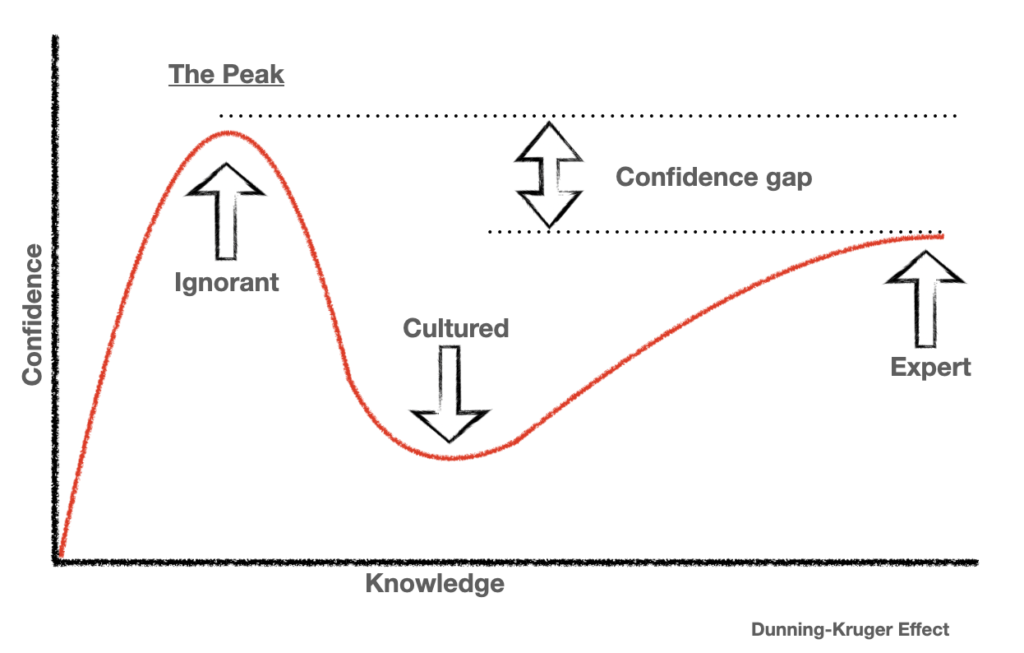
It seems a dangerous belief and also a false one, the fact of knowing how something works does not exempt you from being affected. And, in fact, it makes you more likely to be fulfilled without you noticing as you reflex less about it (Dunning-Kruger effect). It is also a false way of thinking since they only believe they know what it is, but only relate them to a known and partial part of the uses that can be given to their data. This does not seem to affect the user who is in the top right quartet, that is to say those who work with data, who are also the only ones who correctly answer questions about their data rights. This type of user understands that he is permanently exposed to this type of manipulation and tends to protect more which websites access part of his data.
Drunning-Kruger Effect
As final information-pill, some users claim to try to “confuse” the algorithm by subscribing to product websites that would never look for or searching for items that they do not need so that the profile they have of this does not resemble reality.
What do you think of this trial?
Thank you very much for reading me, see you in the next post where we will see negative examples (dark patterns) of cookie window.
Ich habe in meinem ersten Blogbeitrag bereits aufgezeigt, dass es in der Sozialwissenschaft schon lange als Tatsache gilt, dass es keinen Grund zur Annahme gäbe, es bestünde eine naturhaft vorgeschriebene Zweigeschlechtlichkeit. Alle Unterscheidungen zwischen den Geschlechtern, die zum Beispiel auf Charaktereigenschaften oder Vorlieben basieren, sind gesellschaftliche und sozial erlernte Konstrukte. Diese werden nicht nur durch Kommunikation weiter verbreitet, sondern spiegeln sich unter anderen ebenfalls in der Gestaltung sowie der Nutzung von Objekten und Artefakten wieder.
Obwohl die interdisziplinäre Gender-Forschung diesen Umstand schon vor langer Zeit aufgedeckt hat, wird ein Problem von einigen Forschenden kritisch diskutiert: Die Reproduktion von Zweigeschlechtlichkeit durch die Forschung selbst. Prof. Dr. Uta Brandes ist eine der ersten Wisschenschaftler*innen, die international auf dem Gebiet Gender Design forschte. Von 1995 bis 2015 war sie Professorin für Gender und Design sowie für Designforschung an der Köln International School of Design. Sie ist außerdem Mitgründerin des international Gender Design Network und Vorsitzende des Netzwerkes in Deutschland. Ihre Publikationen und empirischen Arbeiten sind einige der wenigen im entsprechenden Forschungsbereich und deswegen auch für meine Recherche von großer Bedeutung.
Uta Brandes beschäftigt sich in ihrem Buch „Gender Design. Streifzüge zwischen Theorie und Empirie“ ebenfalls mit sogenannten „wicket problems“ in der Wissenschaft. Diese Probleme sind laut ihr diese, die sich nicht einfach mit dem Kategoriesystem richtig oder falsch lösen lassen, machen allerdings auf eine wichtige Erkenntnis als Nährboden für wissenschaftliches Arbeiten aufmerksam: Wissenschaft sollte nicht mit der Überzeugung betrieben werden, objektiv sein zu können. Diese Grundeinstellung aus dem Konstruktivismus resultiert aus der Überzeugung, Forschende selbst könnten nicht frei von äußeren Umständen und gesellschaftlicher bzw. persönlicher Beeinflussung sein – auch wenn diese nur unterbewusst stattfindet. Folglich ist davon auszugehen, dass Ergebnisse immer in einem gewissen Maß verfärbt sind. Laut Brandes seien theoretische und empirische Analysen deshalb im besten Fall Annäherungen oder begründete Annahmen, die versuchen Phänomene oder vermeintliche Wirklichkeiten zu erklären. Forschende können demnach selbst gesellschaftlich konstruierte Gender-Stereotype verinnerlicht haben und diese, wenn auch unterbewusst, Einfluss auf ihre Forschung nehmen lassen.
Dazu kommt ein weiteres Dilemma: Auch dann, wenn Forschende die in der Gesellschaft immer noch vorherrschende Zweigeschlechtlichkeit mit ihrer Forschung kritisch hinterfragen und aufzeigen möchten, müssen sie sich in den meisten Fällen selbst einem bi-polaren Kategoriesystem der Geschlechter bedienen. Wenn sie zum Beispiel der Gebrauch, bzw. das Gebrauchsverhalten von Objekten unter Genderaspekten untersucht werden soll, sind Wissenschaftler*innen gezwungen, zumindest in Geschlechtskonstruktionen der Partizipierenden zu unterscheiden. Die Forschung tut dies deswegen gezwungenermaßen, um Gender-Fragestellungen überhaupt erforschen zu können. Diskutiert und kritisiert wird allerdings von vielen Wissenschaftler*innen, Forschungen wie diese könnten Genderkonstruktionen und Stereotype weiter verfestigen. Laut Uta Brandes gäbe es für dieses Dilemma keine wirklich zufriedenstellende Lösung, sie hebt aber hervor, dass der große Unterschied zwischen einfachen ideologischen Behauptungen, es gäbe nur ein bi-polares Geschlechtersystem, darin bestünde, nicht zu untersuchen, was die Geschlechter sind, sondern, was sie tun. Hinzu kommt, dass Forschungen in diesem Bereich (fast) immer mit dem Bewusstsein betrieben werden, welches eingangs bereits erwähnt wurde. Nämlich, dass es sich bei Geschlechtern bzw. Gender um gesellschaftliche Konstrukte handelt, die alles andere als natürlich gegeben sind.
Literaur
Brandes, U. (2017). Gender Design. Streifzüge zwischen Theorie und Empirie. Berlin, Boston: Birkhäuser Verlag. Verfügbar unter: https://doi.org/10.1515/9783035611090
Riegel, C., Baßer, B. (2014). Meine Forschung ist durch und durch politisch. Christine Riegel und Bianca Baßler im Gespräch mit Carol Hagemann-White. Freiburger Zeitschrift für GeschlechterStudien 20/1.
Various analytical tools are used to analyze data in the medical area, thanks to which it is easier to make decisions based on facts. These methods later help in planning, measuring, designing, and educating. Now the global health service is suffering from shortages among doctors and nurses who make primary care. As a result, already overworked specialists have to perform their duties even faster. Unfortunately, the situation is predicted to be even more difficult over the next few years, here the only right solution is to analyze the data and design a system that will make the process easier.
The benefits of analyzing medical data can be: faster delivery of results, making permanent changes, and later designing a new process that will be better, reducing the risk and the number of errors. The first step may be to introduce appropriate programs and artificial intelligence to the health system, which in the future may take on some of the responsibilities. These tools can absorb huge amounts of information and learn from many different types of data.
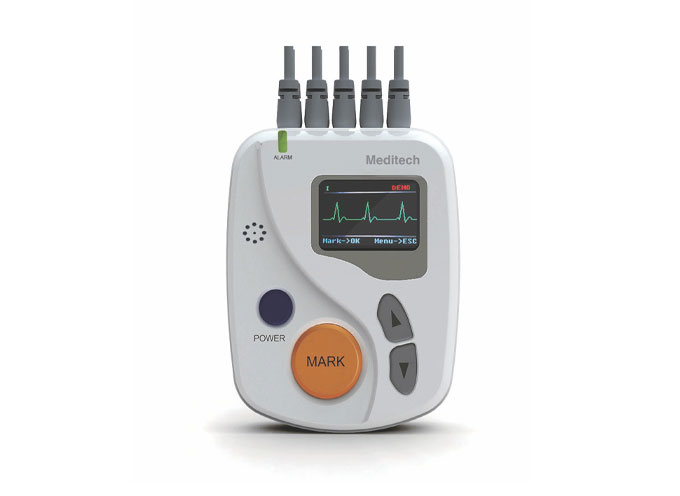
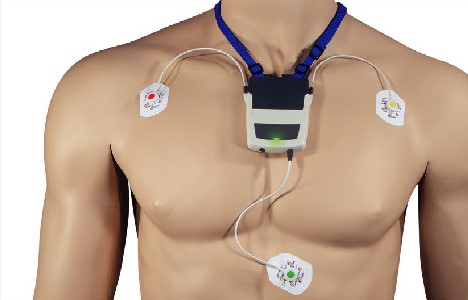
A heart rate monitor (HRM) is a personal monitoring device that measures heart rate in real-time or records the heart rate for later study. It is commonly used to collect heart rate data while performing various types of activity which are part of the patient’s day-to-day life. Portable medical devices are referred to as Holter Monitor which is designed for everyday use and does not use wires to connect.
Modern heart rate monitors commonly use one of two different methods to record heart signals: electrical and optical. Both types of signals can provide the same basic heart rate data, using fully automated algorithms to measure heart rate.
_ Electrical Devices: The electrical monitors consist of two elements: a monitor/transmitter, which is worn on a chest strap, and a receiver. When a heartbeat is detected a radio signal is transmitted, which the receiver uses to display/determine the current heart rate. This signal can be a simple radio pulse or a unique coded signal from the chest strap.
_ Optical Devices: More recent devices use optics to measure heart rate by shining light from an LED through the skin and measuring how it scatters off blood vessels. Smartwatches and cell phones can be included within this category, but their use for medical purposes is limited even though the accuracy in detecting several diseases increased significantly in recent years. Many professionals recommend anyway their use as support in data collection processes.
# HolterMonitor
A Holter monitor is a small, wearable device that keeps track of your heart rhythm. The doctor may want the patient to wear a Holter monitor for one to two days. During that time, the device records all heartbeats. This procedure can be repeated several times if the medical practitioner requires it to accomplish the goal of the overall study.
A Holter monitor test may be done if a traditional electrocardiogram (ECG) doesn’t deliver enough information about the heart’s condition. A Holter monitor may be able to spot occasionally abnormal heart rhythms that an ECG missed due to the short time that the patient is hooked up to the machine. The medical practitioner uses information captured on the Holter monitor to figure out if the patient has e a heart rhythm problem or a heart condition that increases your risk of an abnormal heart rhythm.
# What Patients say:
After interviewing two patients who had to wear the Holter monitor due to different heart conditions, plus the information collected in different clinical studies, these would be the most significant insights referring to the patient experience:
_ Most of the patients found the device uncomfortable. Sometimes, some of their daily activities were difficult to carry out due to the device.
_ Some patients had difficulty putting the device back on after showering. Due to this, the collected data wasn’t accurate.
_ Even though the majority of patients expressed full trust in their doctors, many did not feel involved in the process. They simply had to “follow orders” but did not understand what kind of data was being measured.
_ Some patients experienced a feeling of vulnerability when they gave the device back to their medical facility. Although the device was uncomfortable to wear, it made them feel safe, assuming that their heart was being controlled. Once they removed it, that feeling of security disappeared.
_ Some patients experienced skin allergies due to the adhesive tape on the device.
# What Doctors say:
After interviewing a cardiology physician and a general practitioner, I was able to gather the following insights:
_ It is difficult to ensure successful measurements with elderly patients due to the technical requirements of the device. The majority of patients using this device are older than 60 and sometimes they need to repeat the procedure more than once.
_ Although the device collects valuable information, some conditions,which might be symptoms of more serious heart problems, go unnoticed. (ex. certain types of arrhythmias).
_ They get frustrated because they cannot find the time to explain all the details of the procedure to their patients and they feel patients’ dissatisfaction and uncertainty.
_ “It takes too long to get the data that we need”. Patients must return the device back to the medical center, then the technicians extract the data from the device by connecting it to their system, then the data are included within the patient’s records and saved in databases. Only then doctors are able to have a clear vision of what is going on with their patients.
# Compared with other Devices for Heartbeat Monitoring:
Despite the fact that the Holter monitor is one of the most used devices to measure the heartbeat even today, for a few years, other heartbeat monitors have been coming onto the market offering significant improvements for patients. This is the case of Zio Patch, from iRythm Tech.
But even though this new monitoring option is more manageable, less cumbersome, and has a higher level of data accuracy than the original Holter Monitor, it requires longer use than the Holter Monitor to detect the same number of conditions. This makes procedures a bit harder to perform with both children and the elderly.
As mentioned before, many smartwatches and mobile phones can provide a service similar to heartbeat monitors but are not capable of perceiving certain abnormalities that may indicate heart problems. They are a very good aid for home use because they measure many different parameters such as oxygen saturation, thanks to the use of sensors including accelerometers, gyroscopes, and GPS.
# Conclusions and Challenges
Finding the ideal device is not easy. Both patients and medical professionals have needs that should be met in order to succeed when going through these procedures, and it seems that if you try to improve one part, the other will get worse.
For me, the main challenge is to rethink the design of the device. It is clear to me, that it needs to be something free of technical assistance. The ease of use must be a basic requirement due to the characteristics of the patients who generally use this type of device.
On the other hand, it should offer some kind of interface that could deliver clear information to patients, making them understand what data is being collected. This is already offered on smartphones or smartwatches.
And last but not least, the data collection. The more accurate data collection in the shortest possible time, the medical professionals will be able to deliver better diagnoses in less time. In this way, they will be able to care about the psychological needs of patients before, during, and after the procedures. In my opinion, finding a way to shorten the process from data collection until professionals can access and evaluate this data, should be a priority.
After a couple of meetings with my supervisor and many hours of research and deliberation, my project idea has finally begun to take shape. My initial plan was to build a Mellotron from used cassette player parts, in which all effects would also be created with magnetic tapes. I soon realized that there is a lot of work done in this domain, leaving me little space for innovation, so I had to reconsider the direction of my project.
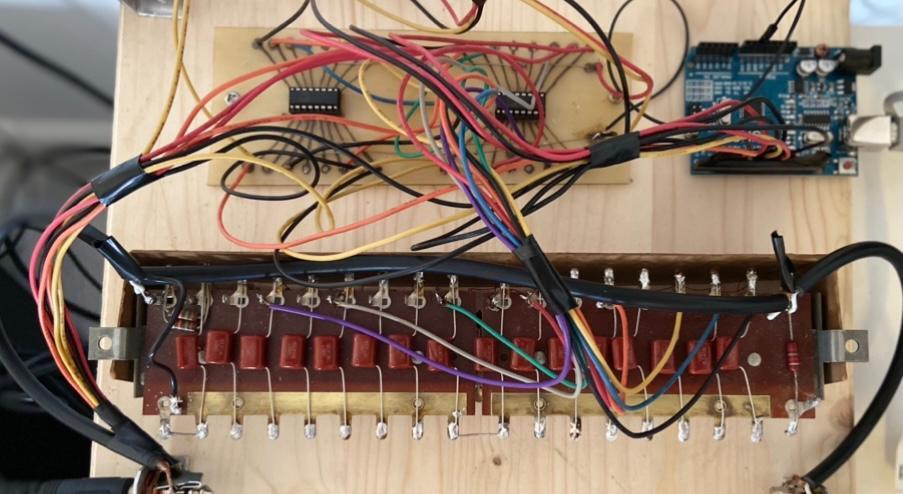
My new proposal is the creation of a guitar effect chain that combines different types of obsolete time-based audio effect technologies with the capabilities of modern microcontrollers. The foundation of this idea came to me first, after discovering the Scanner Vibrato & Reverb guitar effect by Analog Outfitters, a hardware entirely made of refurbished Hammond organ parts. Since then I have managed to acquire one of the core elements of this device, the so-called phase shift line, and build an experimental vibrato effect prototype by combining it with an Arduino Uno microcontroller.
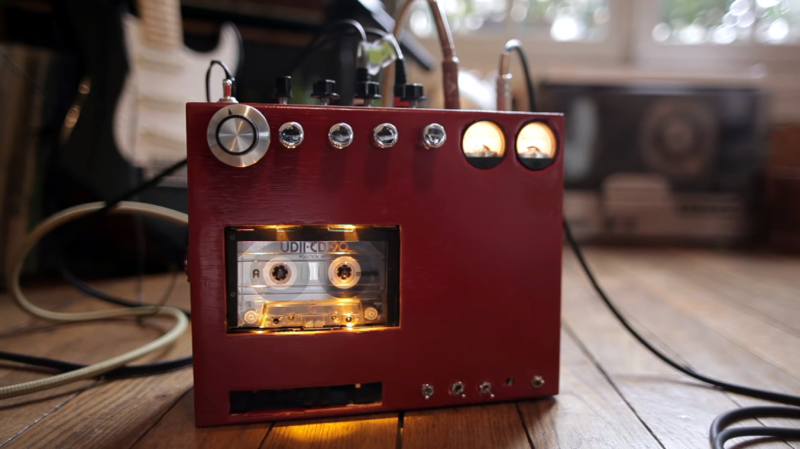
Fortunately, my previous research on magnetic tape was not in vain, as it shaped the development of my new project idea Since the initial project would also include audio effects based on magnetic tape technology, I came across several solutions that make it possible to convert portable cassette decks into delay effects. The combination of a cassette tape delay with the aforementioned phase shift line, led to the idea of a multi-effect and thus the concept of an analog delay chain was born. These two components could provide modulation effects such as vibrato, chorus, and various types of delays, but by introducing a spring reverb tank, even more color could be added to the chain.
In order to expand the capabilities of this delay chain, I would add a microcontroller that is responsible for all control processes. This could even enable manipulation via Bluetooth or WLAN and therefore compress the size of the physical interface on the device. Thus, it would be enough to include only a few rotary encoders to control basic operations, such as volume or rate and an LCD module to display these values. But in more detail on these issues in my upcoming blog entries.
Produkte werden seit je her vom Menschen erzeugt, um bestimmte Zwecke zu erfüllen. Der Zeitpunkt ab dem Produkte in einen zwischenmenschlichen Austausch kommen, führt dazu, dass diesen Gegenständen Bedeutungen, Eigenschaften und Werte zugesprochen werden. Design hat eine tiefe, kulturelle Komponente, die den Menschen nicht nur seit seiner Existenz beschäftigt, sondern auch heute eine wichtige Rolle in der Identifizierung etwaiger Kulturkreise Zuspruch findet.
Design ist die planvoll-kreative Visualisierung von Handlungsprozessen und Botschaften von verschiedenen gesellschaftlichen Akteur*Innen und die planvoll-kreative Gestaltung der verschiedenen Funktionen von Gebrauchsgegenständen und ihre Ausrichtung auf die Bedürfnisse der Benutzer*Innen oder auf die Wirkung bei den Rezipient*Innen.
Beate Schneider
Der Einfluss von sozialen Formationen und Handlungsformen hat das Design historisch schon immer in spezifischen Ausprägungen beeinflusst. Dabei ist klar zu erkennen, dass Design stets im Zusammenhang mit Ökonomie steht und dass ökonomische Bedingungen das zeitgenössische Design prägen.
Um dem Design seine Authentizität zu gewähren, ist es von Bedeutung, dass die ökonomische Wahrheit, an die jeweilige Kulturgeschichte des Designs ansetzt. Den größten Einfluss auf die Destruktion dieser Authentizität, stellt die industrielle Revolution in Europa dar. So hat sich die Definition von Tradition, Kultur und Handwerk im Laufe der Zeit verändert. Heute schadet die Konsumkultur, die eine Folge des Industrialismus und des Kapitalismus ist, das ökologische Leben der Ursprünglichkeit. Die Tradition ist vom Aussterben bedroht, da für sie kein Nutzen mehr gefunden wird.
Der Anspruch an zeitgemäßes Design, steht jedoch immer mehr im Fokus. Das postindustrielle Zeitalter verlangt nach neuen, alternativen Lösungen. So wird das Bewusstsein der Konsumenten immer nachhaltiger und der kulturelle Austausch, der besonders der Globalisierung zu verdanken ist, immer wichtiger. Seit der zweiten Hälfte des 20. Jahrhunderts werden nicht nur die wirtschaftlichen, sondern auch soziale, politische, ökologische und ethische Funktionen des Designs berücksichtigt.
Um diesem Problem entgegen zu wirken, gäbe es die Möglichkeit der Tradition einen neuen, zeitgenössischen Nutzen zu verleihen. Die kreative Umsetzung traditioneller Kultur in modernes Design, kann dazu beitragen, dass eine solide Grundlage für die Entwicklung der nationalen Kultur gegeben ist. Gegenstände mit kultureller Authentizität, können den historischen Ursprung bewahren, indem die visuelle und praktische Darstellung dem Objekt eine neue Funktion verleiht.
Quellen:
Schneider, Beate: Design — Eine Einführung: Entwurf im Sozialen, Kulturellen und Wirtschaftlichen Kontext. Walter de Gruyter, 2005.
Ovacık, Mine: Responsible Design Acts in a Graduate Program: Slowing Down for More Qualified Social Life. 2015
Since my work will be implemented in a eurorack system I attempted to find references of existing modules that would do a similar thing. As expected I found no modules where Music-Information-Retrieval is implemented. But there are Modules with which like Pichfollowers, envelope-followers, combinations of those two and separate building blocks.
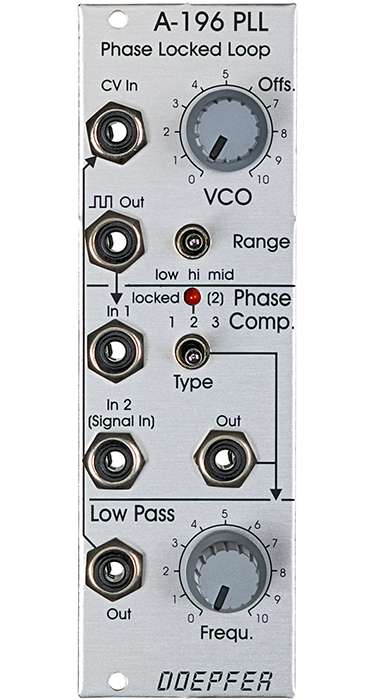
Doepfer a-196 PLL:
The A-196 PLL is a Phase-locked-loop (PLL) module. PLL-circuits are commonly used in pitch-tracker devices. It is a comparative circuit that compares two oscillating signals in their relative Phase. The A-196 is more of a weird oscillator than a Modulation source but it has 3 different parts one of which is a PLL circuit.
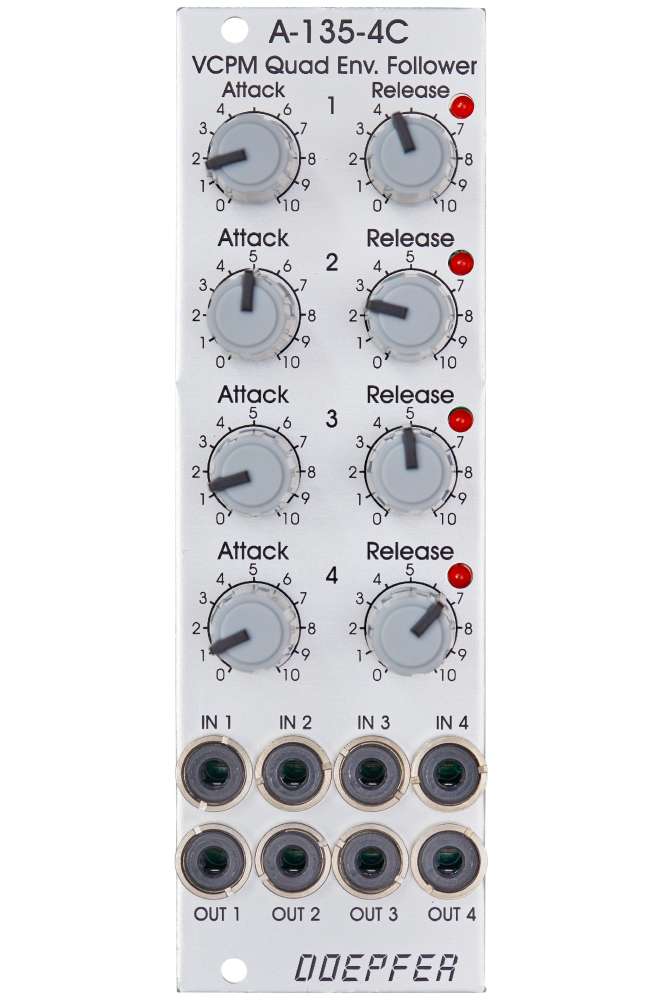
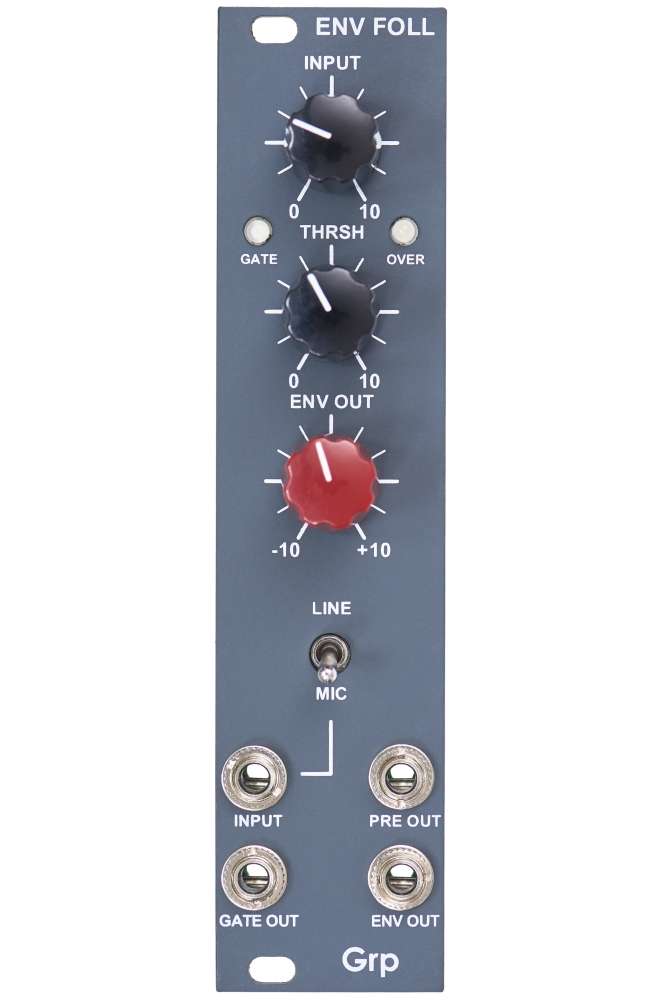
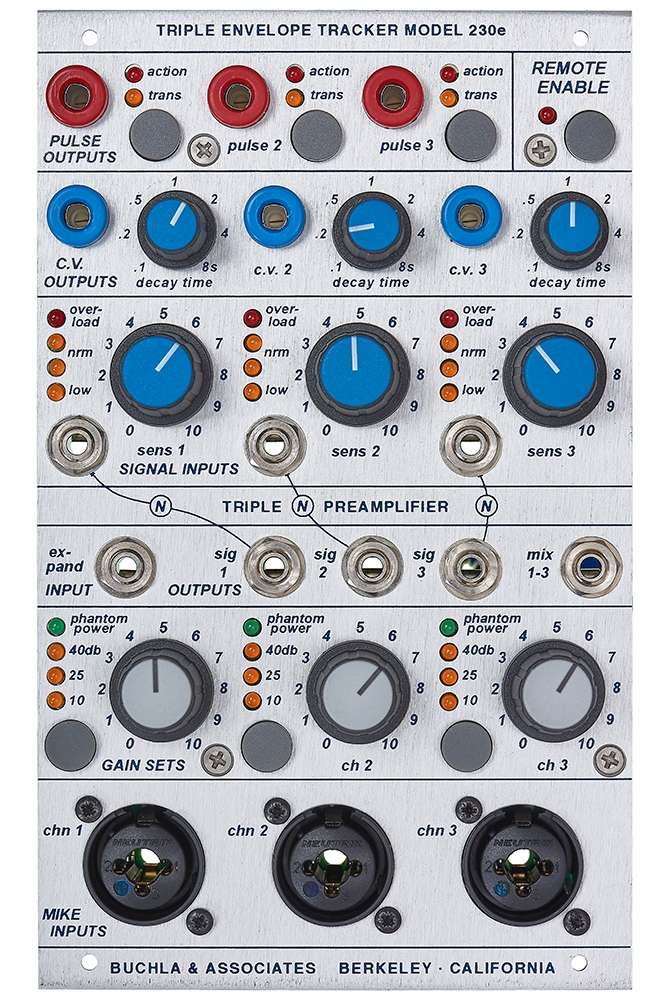
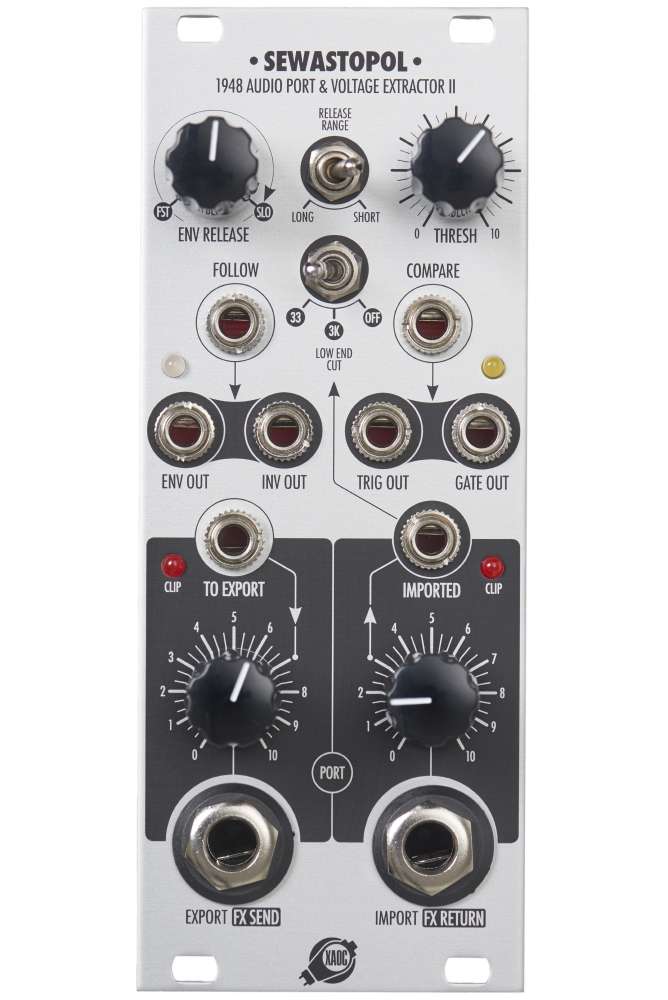
These are quite ‚simple‘ envelope followers which take the amplitude of a signal over time and translate it into an envelope. Every module is its own interpretation of controllable parameters like threshold, attack, release or internal triggers (Buchla). As you might recognize the 230e is not a eurorack format, but as there are not many examples I included a Buchla module.
Also an envelope follower but with a twist. It has more functions one of which is an envelope follower but also a comparator module between two signals.
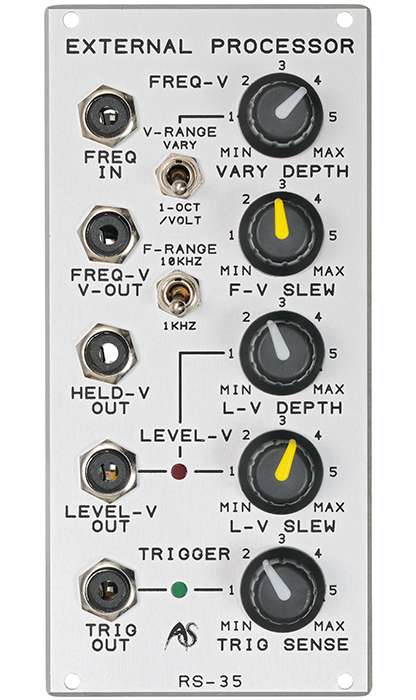
Analogue Systems RS-35N:
Here the envelope follower is combined with a pitch tracker and a trigger which are the basic values to play a synthesizer voice be it percussive or tonal. It also is equipped with its own set of adjustable parameters to control the inputs and outputs of the signal.
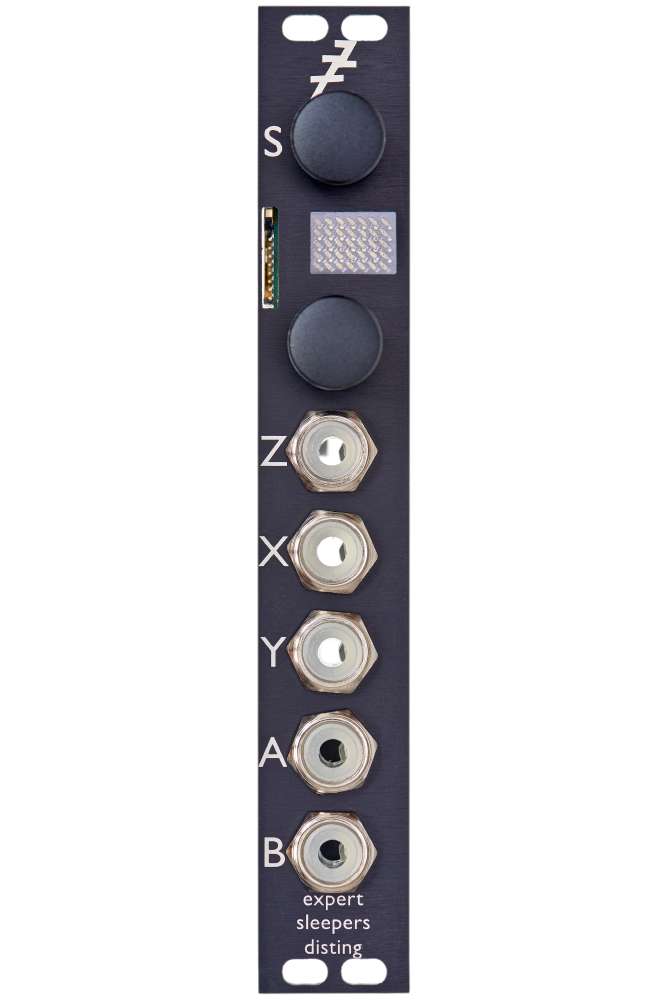
Expert Sleepers Disting mk4:
The Disting Mark 4 is a Digital signal processor which provides many algorithms for modular synthesis. One of those algorithms is a pitch and envelope tracker.
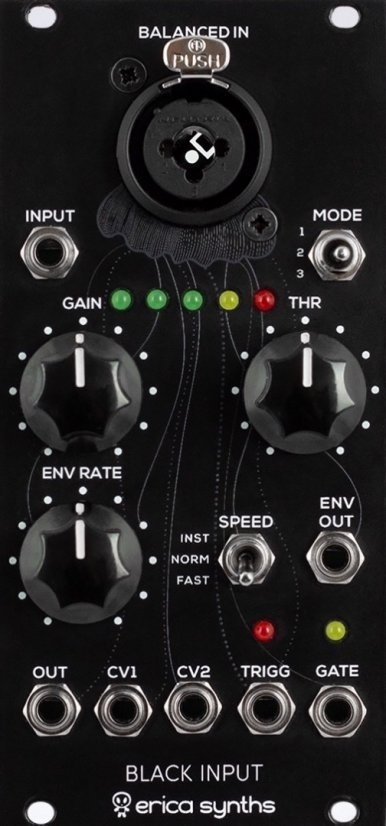
Erica Synths Black Input:
Is not an existing module. it is a concept in unclear development stage. The functions it may provide are the following:
1. Balanced inputs withXLR, 6.3mm TRS and 3.5mm TRS
2. Input preamp with adjustable gain and level indicator
3. Envelope follower with adjustable threshold and rate
4. Gate and Trigger outputs
5. Accurate, low latency monophonic pitch tracker
6. Continuous and quantized (by semitones) CV outputs